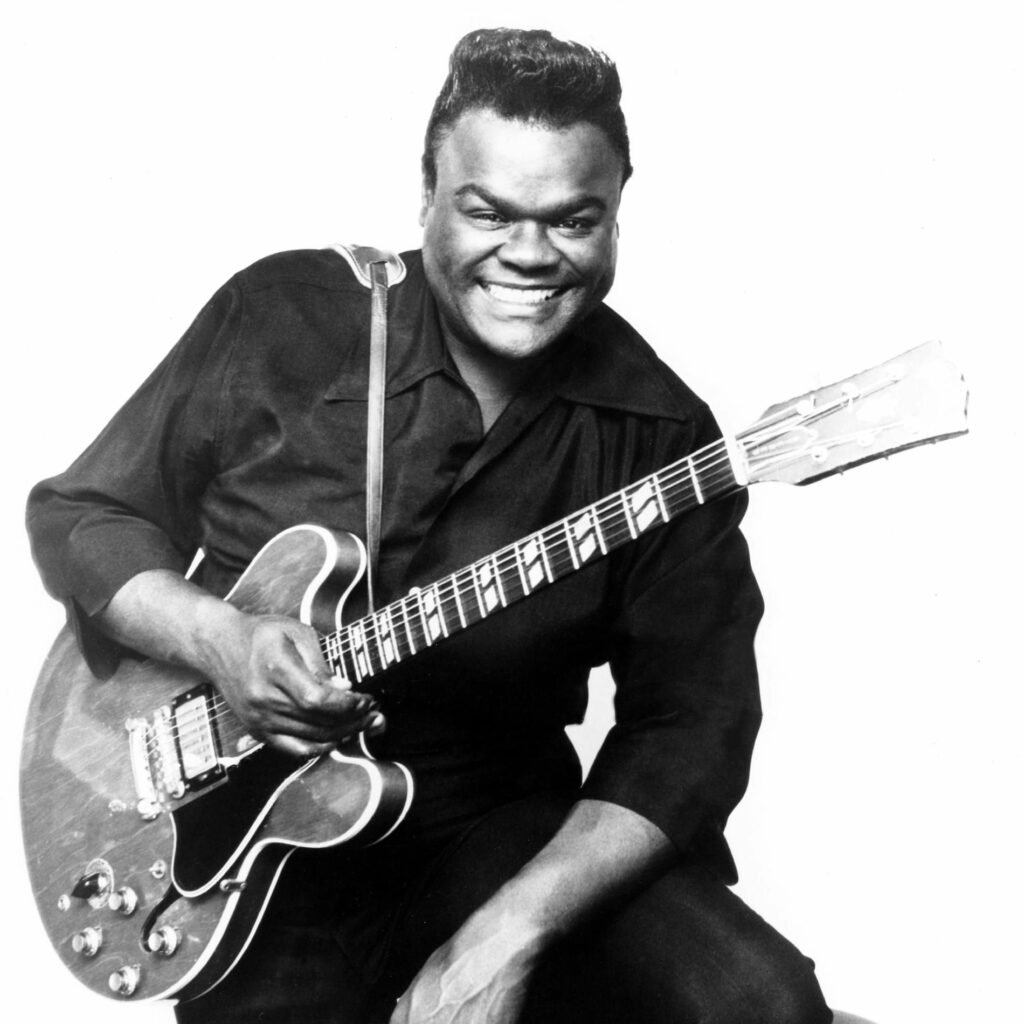
Before the world knew him as “The Texas Cannonball,” Freddie King was just a kid in Gilmer, Texas, absorbing the blues like oxygen. Born in 1934, raised between East Texas and Chicago, he grew up in that sacred intersection where Southern feel meets Northern electricity. His first teachers weren’t conservatory types but family: his mother Ella Mae and his Uncle Leon, who showed him how the blues could speak even when people couldn’t. When the family moved to Chicago in the early ’50s, Freddie walked straight into the furnace. This was the city of giants — Muddy Waters, Howlin’ Wolf, Jimmy Rogers, Elmore James — and while most teenagers were trying to figure out life, Freddie was figuring out tone.
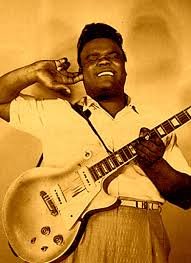
He wasn’t a quiet student either. Freddie haunted the West Side clubs, watching, imitating, and then challenging the veterans. Hound Dog Taylor showed him how to make a guitar weep; Eddie Taylor brought him finesse; and Hubert Sumlin reminded him that danger belongs in every bend. But Freddie wasn’t just learning — he was mutating. He fused the Texas string attack of Lightnin’ Hopkins with the punch of Chicago’s amplified blues, creating a sharp, slicing guitar voice nobody had heard before. By the time he hit the club circuit proper, musicians were already whispering his name. The boy had hands like a heavyweight and instincts like a prophet. And the moment he plugged in for real, everyone in the room knew: a new king was stepping into the lineage.
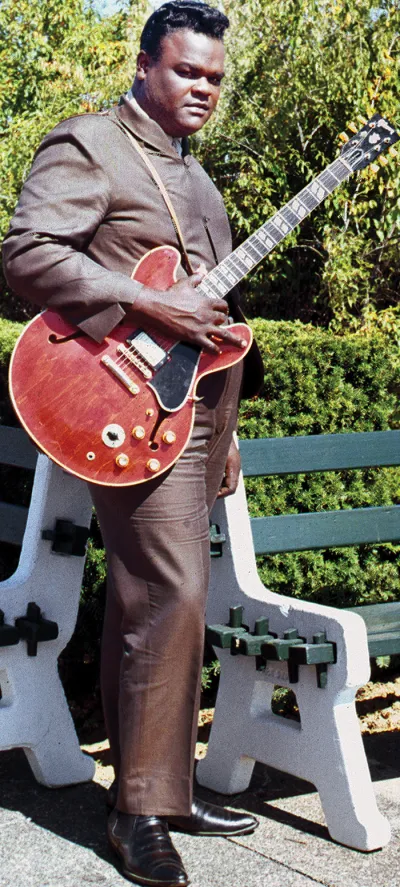
Freddie didn’t “rise” so much as detonate. What set him apart wasn’t just speed — though his speed scared other guitarists — but intention. Freddie played like he was in a fistfight with the truth. When he entered the studio with Federal Records in 1959, it didn’t take long for the world to wake up. “Have You Ever Loved a Woman,” “Hide Away,” and “I’m Tore Down” weren’t simply songs; they were declarations. “Hide Away,” in particular, changed everything. Radio stations picked it up, white kids copied it, and suddenly Freddie King — tall, wide, and unstoppable — was touring like a rock star before rock stardom even belonged to Black blues musicians.
Freddie’s creativity sat at the crossroads of aggression and sweetness. He could tear through a solo like a chainsaw but land on a note with such softness it felt like a prayer. And his voice — raw, aching, cracked with gospel ache — gave the blues a new emotional dimension. Guitarists studied him like scripture. Eric Clapton treated his songs as required reading. Duane Allman, Jeff Beck, and Stevie Ray Vaughan didn’t just admire him; they measured themselves against him. Freddie King democratized the electric blues vocabulary, opened the door to crossover audiences, and injected a kind of athleticism into the guitar that altered the entire DNA of modern blues. He was the missing link between gospel-rooted blues, soul-driven phrasing, and rock’s explosive future.
Freddie’s recording career is a masterclass in transformation. His early ’60s Federal era birthed the classics — Freddy King Sings (1961), Let’s Hide Away and Dance Away (1961), Bossa Nova and Blues (1963). These weren’t just records; they were templates for generations. The instrumentals from these sessions still sit in every guitarist’s bloodstream.
When he moved to King Records mid-decade, he refined his sound, adding more soul, tighter arrangements, and a sharper sense of studio direction. By the time he signed with Leon Russell’s Shelter Records in 1970, Freddie was entering his imperial phase. Getting Ready… (1971), Texas Cannonball (1972), and Woman Across the River (1973) formed a holy trinity that cemented him as the bridge between blues elders and the rock generation. These albums not only reintroduced Freddie to a new audience; they repositioned him as a contemporary force.
Collaborations? Freddie was everywhere. He crossed paths with Clapton (who adopted “Hide Away” as a signature number), jammed with Grand Funk Railroad, tore stages with Jeff Beck, traded lines with Delaney & Bonnie, and was a spiritual blueprint for the Allman Brothers Band’s twin-guitar approach. Historically documented sessions include work with King Curtis, Leon Russell’s Shelter stable, and his mentorship-like influence over future blues-rock icons. His sound became a collective property — borrowed, honoured, copied, stolen, reinvented — but always traced back to the Cannonball.
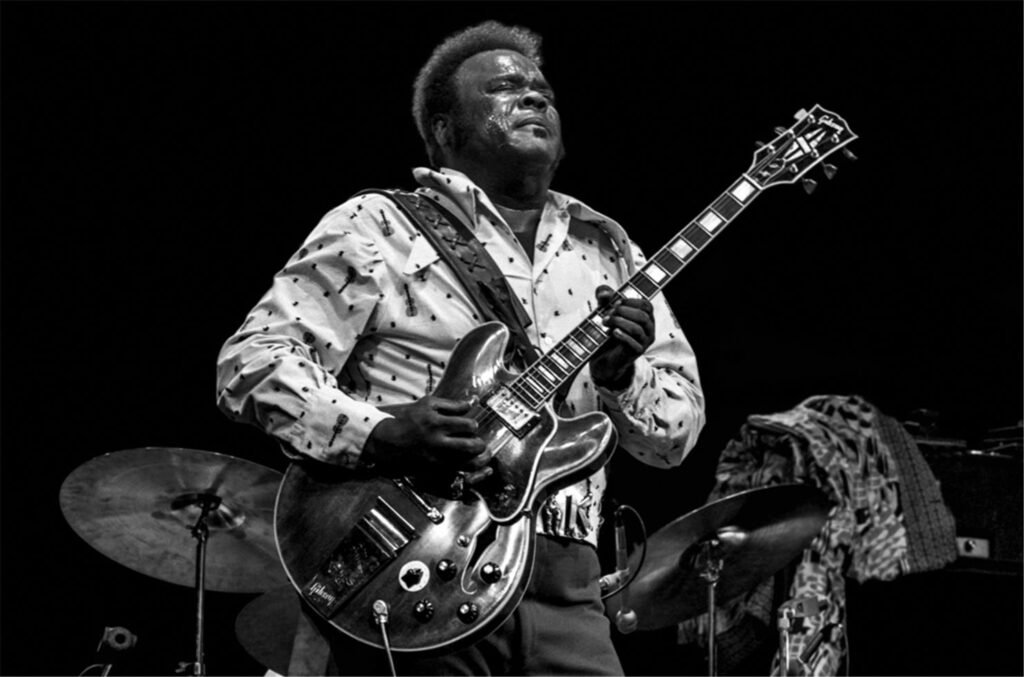
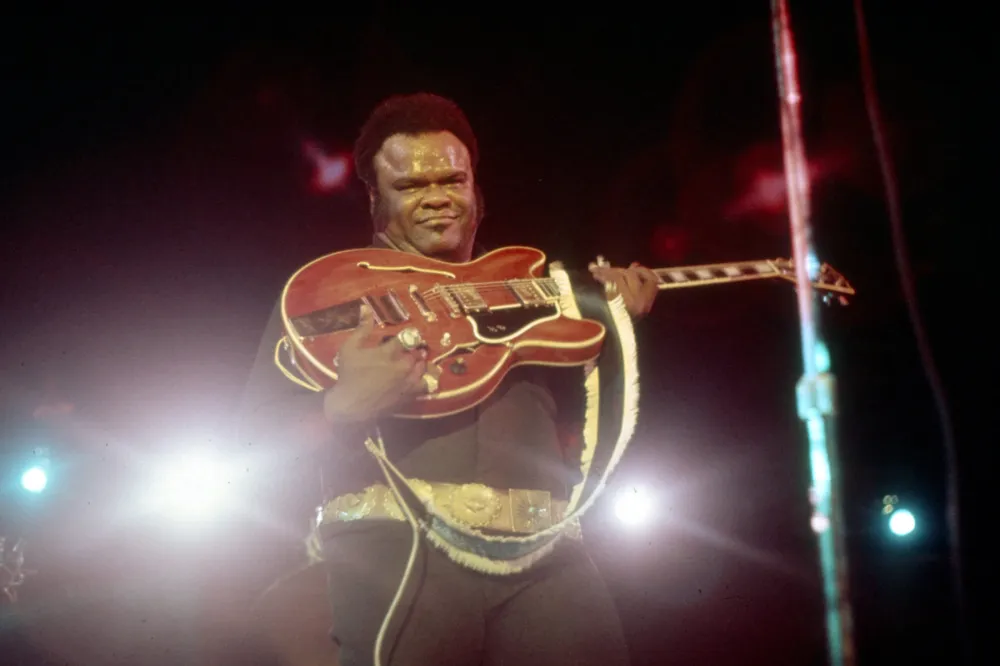
Freddie King wasn’t built for half-speed. Onstage he was volcanic — sweaty, smiling, dangerous, tender, unstoppable. He toured relentlessly, outplaying musicians half his age and outworking bands twice his size. At the height of his career, Freddie was performing over 300 nights a year, pounding through smoke-filled clubs, sprawling festivals, college halls, and European circuits. His shows were marathons of emotion and endurance. He’d play until strings snapped, until amplifiers fried, until audiences were exhausted. Then he’d play some more.
But the lifestyle that amplified his legend also eroded his health. Constant travel, brutal schedules, long nights, and severe stomach ulcers took a toll. In December 1976, Freddie King collapsed during a tour. Days later, at only 42 years old, he died from complications linked to pancreatitis and heart failure. A king gone far too soon — but not before reshaping the very definition of blues performance. Freddie left thousands of nights’ worth of sweat on the floors of America and Europe. The road was his home, his blessing, and ultimately, his undoing.
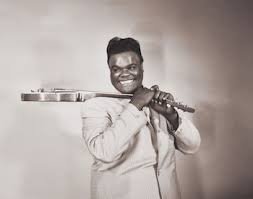
Freddie King isn’t just one of the three Kings; he’s one of the pillars of modern guitar language. His playing became the Rosetta Stone for electric blues and blues-rock. The way he phrased bends, the thumb-pick attack, the open-string runs, the emotional urgency — all of it helped redraw the map. Clapton’s Cream era? Freddie’s fingerprints. Stevie Ray Vaughan’s Texas fury? Freddie’s direct inheritance. Jeff Beck’s melodic aggression? Freddie again. Even players who never consciously studied him have absorbed his DNA through the artists who did.
Freddie brought showmanship to the blues without compromising depth. He connected Texas grit to Chicago sophistication. He gave the blues a physicality that rock musicians fed on for decades. And he carried the music into new spaces — white college circuits, rock arenas, European stages — reminding the world that the blues was not relic or folk artifact, but a living, breathing force.
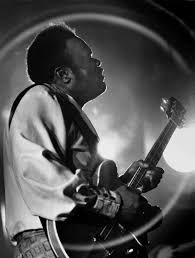
His influence today is everywhere: in the tone chasers, the shredders, the soul revivalists, the modern Texas players, the jam bands, the indie acts rediscovering blues phrasing, and every musician who has ever stood on a stage and thought, “I want to make this guitar testify.”
Freddie King didn’t just contribute to the blues. He expanded its vocabulary. He passed the torch by lighting it on fire. And in doing so, he carved his name into the immortal architecture of Black American music.
FULL FREDDIE KING DISCOGRAPHY
STUDIO ALBUMS
• Freddy King Sings (1961)
• Let’s Hide Away and Dance Away with Freddy King (1961)
• Bossa Nova and Blues (1963)
• Freddy King Gives You a Bonanza of Instrumentals (1965)
• The Beat (1966)
• My Feeling for the Blues (1970)
• Getting Ready… (1971)
• Texas Cannonball (1972)
• Woman Across the River (1973)
• Burglar (1974)
• Larger Than Life (1975)
LIVE ALBUMS
• Live at the Electric Ballroom (1974)
• Live at the Texas Opry House (recorded 1976, released posthumously)
KEY SINGLES
• “Hide Away”
• “I’m Tore Down”
• “Have You Ever Loved a Woman”
• “The Stumble”
• “San-Ho-Zay”
• “You’ve Got to Love Her With a Feeling”
COLLABORATIONS / HISTORIC SESSIONS / DOCUMENTED SITS-INS
• Leon Russell & Shelter Records sessions
• Delaney & Bonnie live features
• Grand Funk Railroad jam sessions
• King Curtis band appearances
• Jeff Beck informal stage collaborations
• Influence-based collaborations: Eric Clapton, Duane Allman, Stevie Ray Vaughan, ZZ Top, The Allman Brothers Band
If you’ve made it this far, you’re probably in the mood to discover more music like this !!!

 English
  Spanish