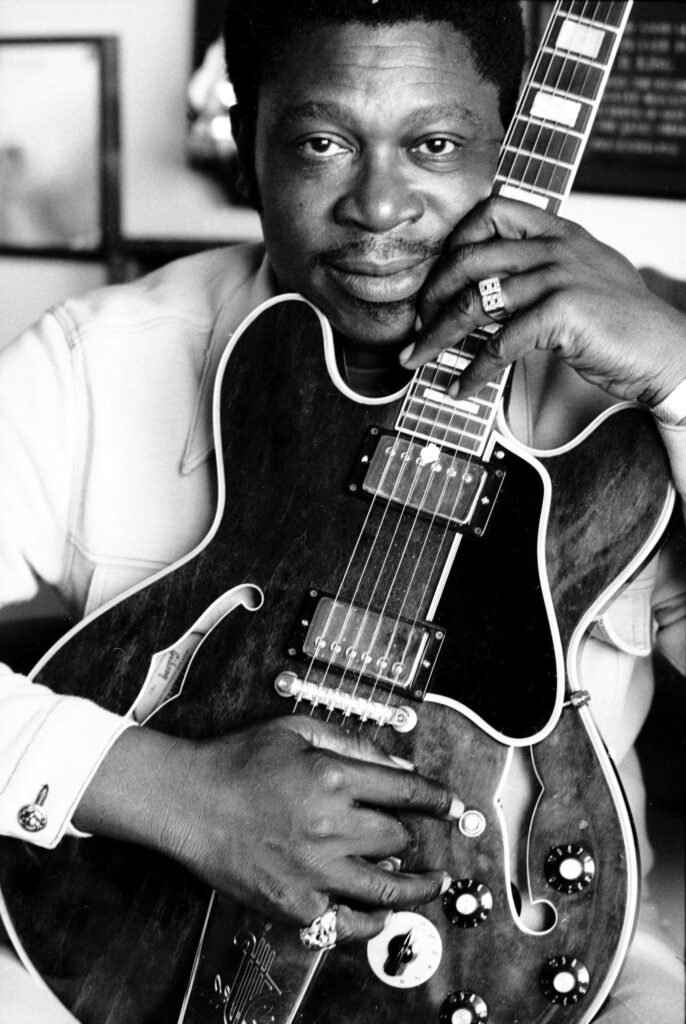
Before he became B.B.—before the world crowned him King of the Blues—Riley B. King was just a barefoot kid from Berclair, Mississippi, carrying equal parts gospel devotion and raw Delta hunger. Born in 1925 on a cotton plantation, B.B.’s childhood was carved from the same soil that shaped the blues itself: long days picking cotton, nights listening to the church moan with sanctified urgency, and a steady river of stories, pain, and resilience echoing through every porch and back road in the Delta.
His earliest teachers were spiritual: the Reverend Archie Fair, the “Sanctified preacher” who showed him that music could lift a congregation off the floor; and his mother’s cousin, Bukka White, who became both a blood tie and a musical lighthouse. When B.B. left for Memphis in 1946—hungry, broke, hauling little more than hope—he landed straight into an ecosystem of legends: T-Bone Walker pouring silk through electric strings, Sonny Boy Williamson II teaching real-world blues diplomacy on the airwaves, and the loose-but-lethal Beale Street scene pushing him to shape his own voice.
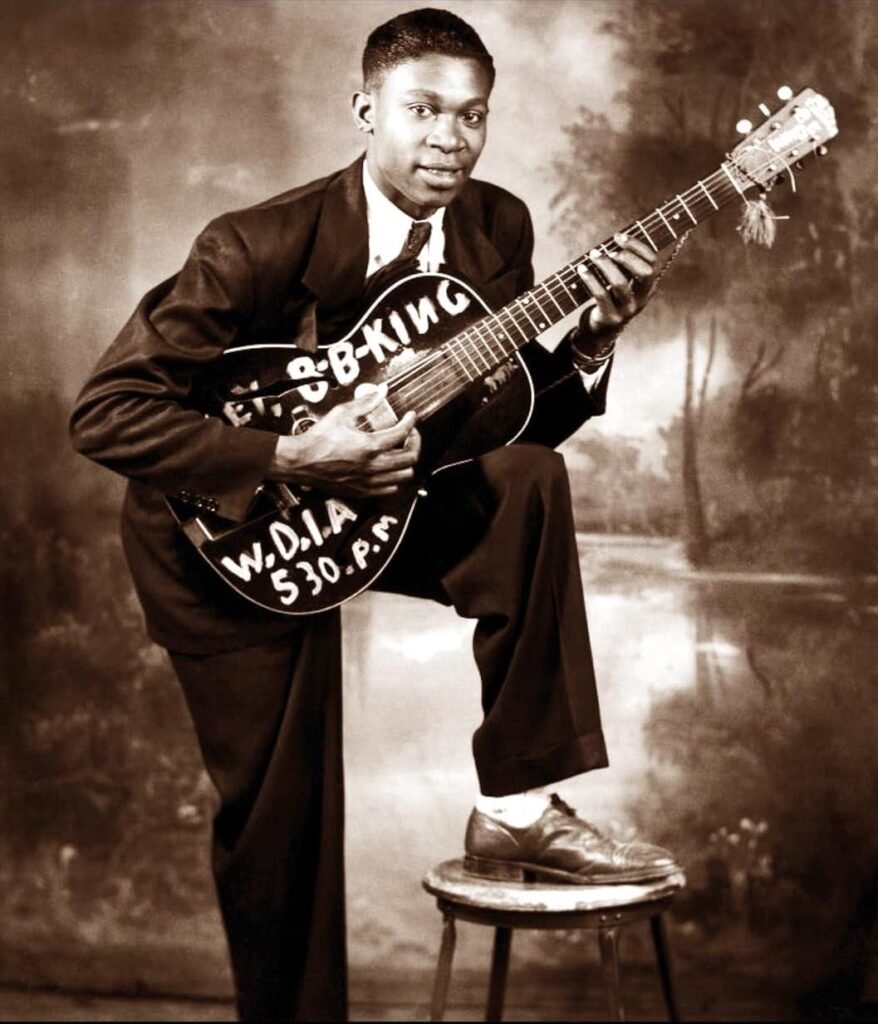
Radio made him. The WDIA crew—Nat D. Williams, Rufus Thomas, and the whole pioneering team—put him on air as the “Beale Street Blues Boy,” which later gave birth to the initials that stuck: B.B. King. Those WDIA broadcasts made him a regional star and cemented his identity as the emerging prince of a modern, electrified blues—a blues that wouldn’t stay on the plantation or in Memphis long. It was already aiming for the world.
B.B. King did not rise through controversy or novelty—he rose through mastery. What separated him from the crowded postwar electric blues scene wasn’t just technique; it was the way he felt through the guitar, the way he carved speech patterns into solos like he was testifying in a pulpit. His vibrato—fast, trembling, almost vocal—became a fingerprint. His phrasing—one note held slightly behind the beat, another bent with almost conversational sass—became the grammar of modern blues guitar.
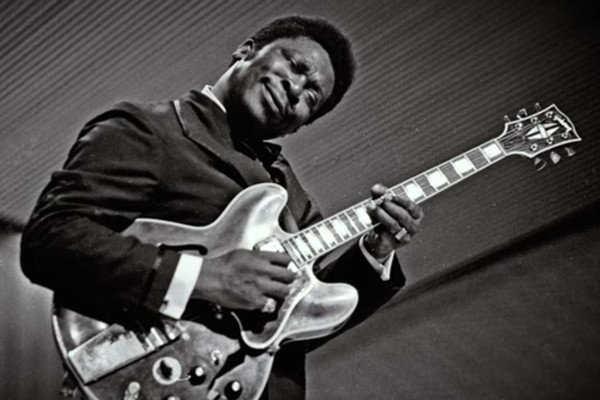
Hits like “Three O’Clock Blues”, “You Upset Me Baby”, and “Sweet Sixteen” established him as a chart force, but it was his relentless touring schedule—sometimes 300 shows a year—that forged the legend. And then came “The Thrill Is Gone” (1969), the breakthrough that elevated him from blues hero to global icon. The track’s orchestration, its moody atmosphere, its sense of exhausted longing—this was blues dressed in new clothes, ready for the psychedelic era without sacrificing its emotional DNA.
B.B. wasn’t just playing the blues; he was pushing it into new spaces: Las Vegas showrooms, major rock festivals, international TV broadcasts, and integrated concert halls that had rarely booked a Black bluesman as a headliner. His contribution wasn’t only musical—it was cultural. He brought the blues into rooms that didn’t know they needed it. He made the electric guitar a storyteller. He turned Lucille into a myth.
Throughout the ’60s and ’70s, B.B. King built bridges across genres with a courage that other blues traditionalists didn’t always understand at the time. He toured with the Rolling Stones. He recorded with jazz giants. He collaborated with soul orchestras, country players, and rock producers. And he never allowed the blues to become a museum piece.
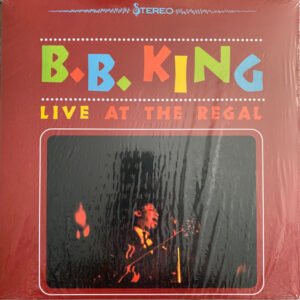
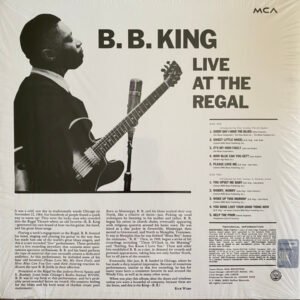
His discography is a living document of that experimentation: “Live at the Regal” (1965) — A masterpiece of crowd energy and absolute command. Many guitarists (Clapton among them) call it the greatest live blues album of all time. “Blues Is King” (1967) — Raw, sweaty, Chicago-club electricity. “Indianola Mississippi Seeds” (1970) — His most genre-blending studio statement, produced partly by Bill Szymczyk and featuring Leon Russell and Carole King. “To Know You Is to Love You” (1973) — Funkier, looser, crafted with the Philly soul architects. “B.B. King in London” (1971) — Cross-Atlantic collaboration at its finest. “There Must Be a Better World Somewhere” (1981) — A late-career emotional peak.“Deuces Wild” (1997) — Features everyone from Van Morrison to Etta James.“Riding With the King” (2000) with Eric Clapton — A Grammy-winning late triumph. “One Kind Favor” (2008) — His final great studio album; reflective, unhurried, deeply human.
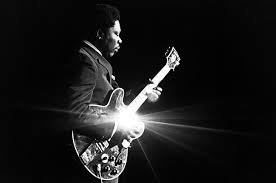
B.B. King lived on stage. The road was his second home, his chapel, his arena. From the 1950s through the early 2010s, he toured with a stamina that seemed supernatural. At his peak, he performed 300 nights a year. Even into his 80s, he stayed above 100. He played juke joints, casinos, European theaters, Southern prisons, and enormous festivals with the same gratitude and discipline. His shows were ceremonies: the tuxedo, the horn section, the stage banter that could charm an audience before he touched a string. And then there was Lucille—actually a long lineage of Gibsons named Lucille—and his ritual of letting the band simmer low until he stepped in, bending a phrase so tender it felt like a heartbeat.
But constant travel took its toll. Diabetes weakened him early, but he refused to slow down. When he passed in 2015, at 89, it felt less like the loss of a musician and more like the shuttering of an entire era. He didn’t just play the blues—he embodied its endurance, its global journey, its refusal to die.
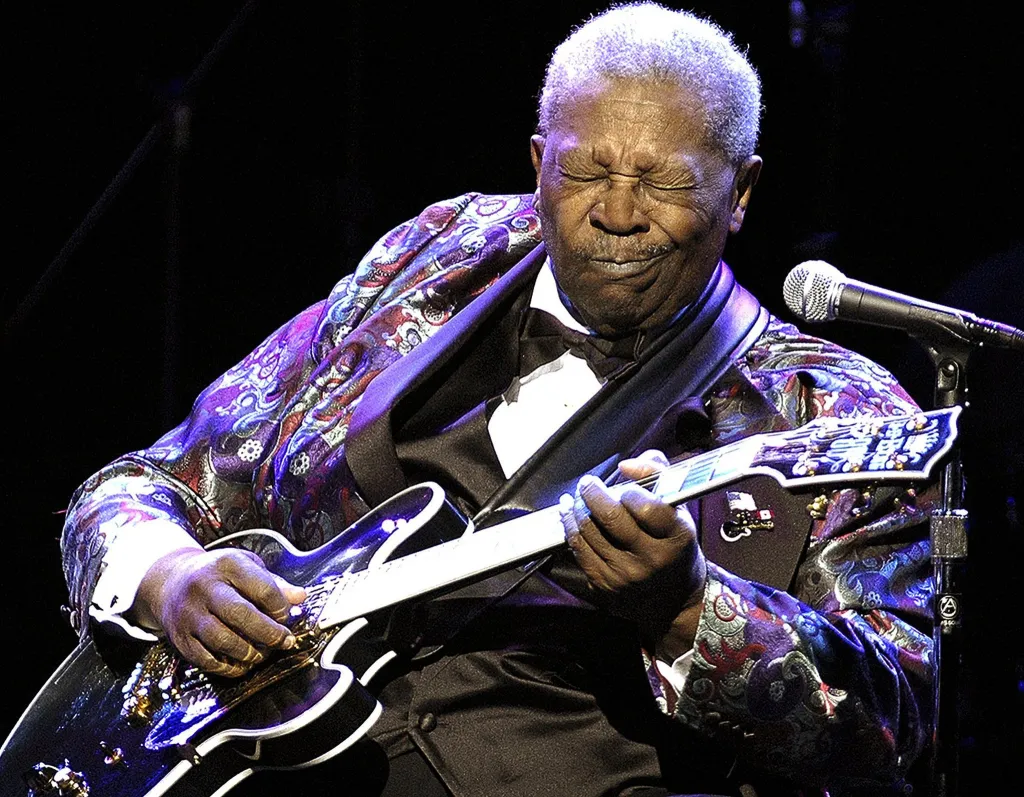
B.B. King’s importance is not up for debate; it’s encoded into modern music. Every guitarist who bends a note with intention—every singer who finds the blues hidden in another genre—every fan who treats live music as communion—is touching something B.B. helped build.
His influence reaches across the Blues — His phrasing is the blueprint; going to Rock — Clapton, Hendrix, Gilmour, Santana—direct disciples; passing through the Soul & R&B — His bends and vibrato became vocal standards; touching the Jazz & Fusion — His minimalist storytelling influenced horn players as much as guitarists; or ending on Hip-Hop — His records have been sampled for decades, especially in storytelling-heavy tracks.
But beyond technical legacy, there’s something deeper: B.B. King showed the world the dignity, depth, and global relevance of Black American blues. He fought segregation simply by stepping onto integrated stages with elegance and command. He preserved the Delta’s emotional truth while pushing the music forward. And he lived long enough to watch generations of musicians call him teacher.
B.B. King didn’t just hold the throne. He built it…
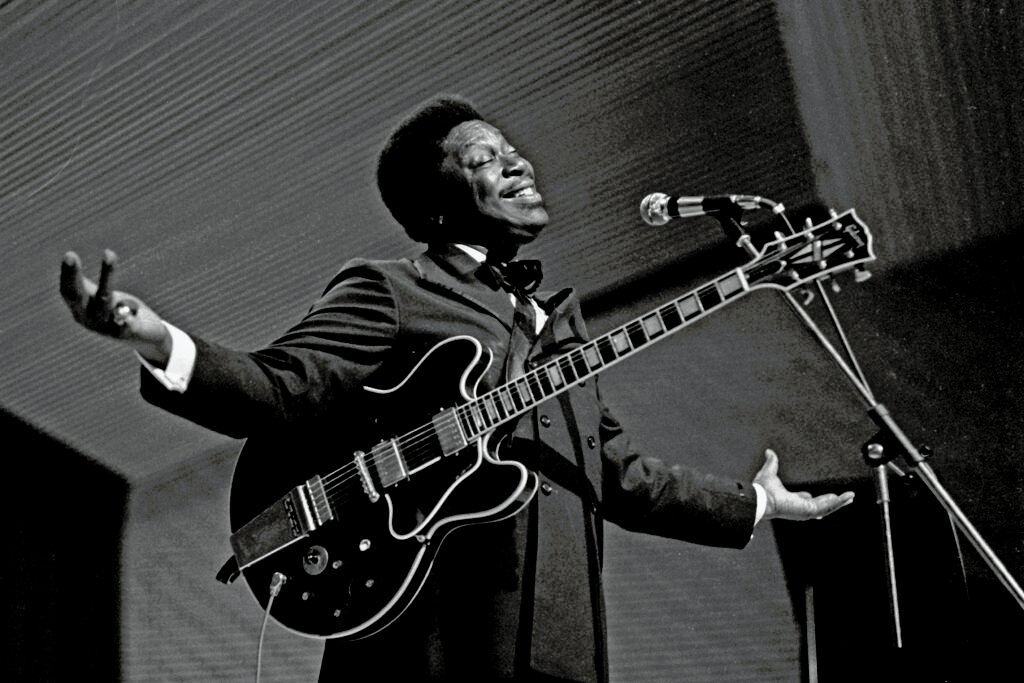
B.B. King — Core Solo Discography (Selected Highlights)
1950s–1960s:
• Singin’ the Blues (1956)
• The Blues (1958)
• King of the Blues (1960)
• My Kind of Blues (1961)
• Blues in My Heart (1962)
• Mr. Blues (1963)
• Live at the Regal (1965)
• Live at the Cook County Jail (1971)
1970s:
• Indianola Mississippi Seeds (1970)
• B.B. King in London (1971)
• L.A. Midnight (1972)
• To Know You Is to Love You (1973)
• Friends (1974)
• Midnight Believer (1978)
• Take It Home (1979)
1980s–2000s:
• There Must Be a Better World Somewhere (1981)
• Love Me Tender (1982)
• King of the Blues: 1989 (1988)
• Lucille & Friends (1995)
• Deuces Wild (1997)
• Riding with the King (with Eric Clapton, 2000)
• One Kind Favor (2008)
Key Singles
• “Three O’Clock Blues”
• “You Upset Me Baby”
• “Sweet Sixteen”
• “Every Day I Have the Blues”
• “The Thrill Is Gone”
Documented Collaborations / Sessions / Notable Joint Projects
• Eric Clapton — Riding With the King (2000)
• U2 — “When Love Comes to Town”
• Bobby Bland — Together Again… Live
• Etta James — “There’s Something on Your Mind”
• T-Bone Walker tribute sessions
• Jazz Crusaders / Crusaders projects
• Robert Cray, John Lee Hooker, Albert King, Buddy Guy — numerous live sit-ins and specials
• Carole King, Leon Russell, Joe Walsh, Ringo Starr — Indianola Mississippi Seeds sessions
• Philly Soul collaborators — Gamble & Huff, MFSB musicians
• Bonnie Raitt, Sheryl Crow, Van Morrison — on Deuces Wild
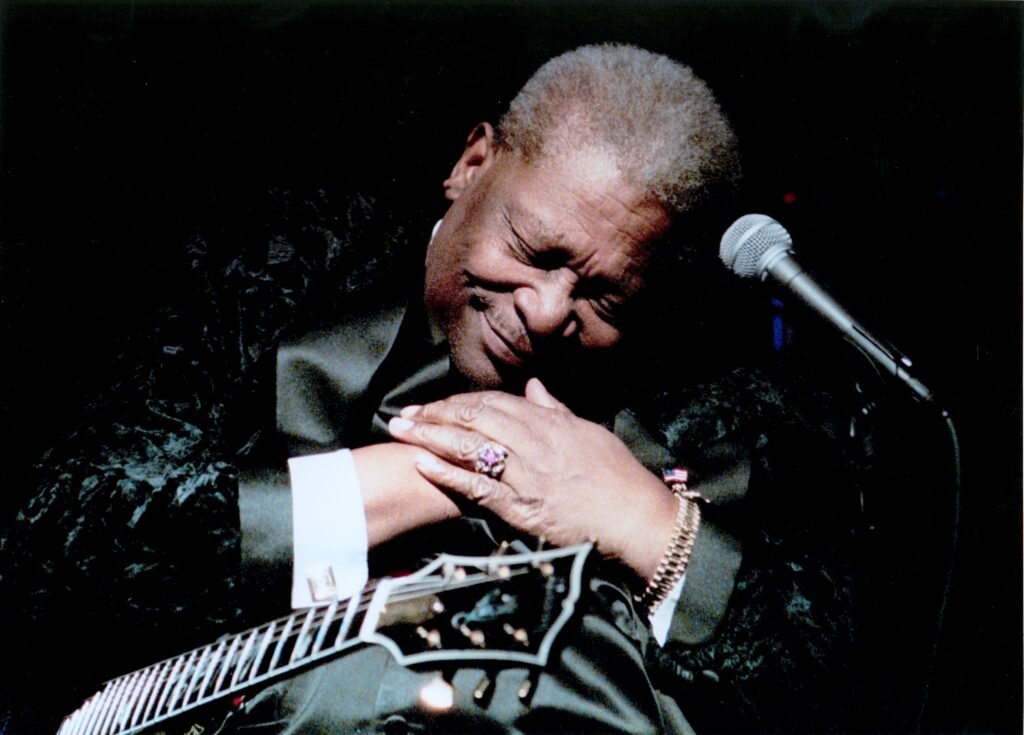
If you’ve made it this far, you’re probably in the mood to discover more music like this !!!

 English
  Spanish