
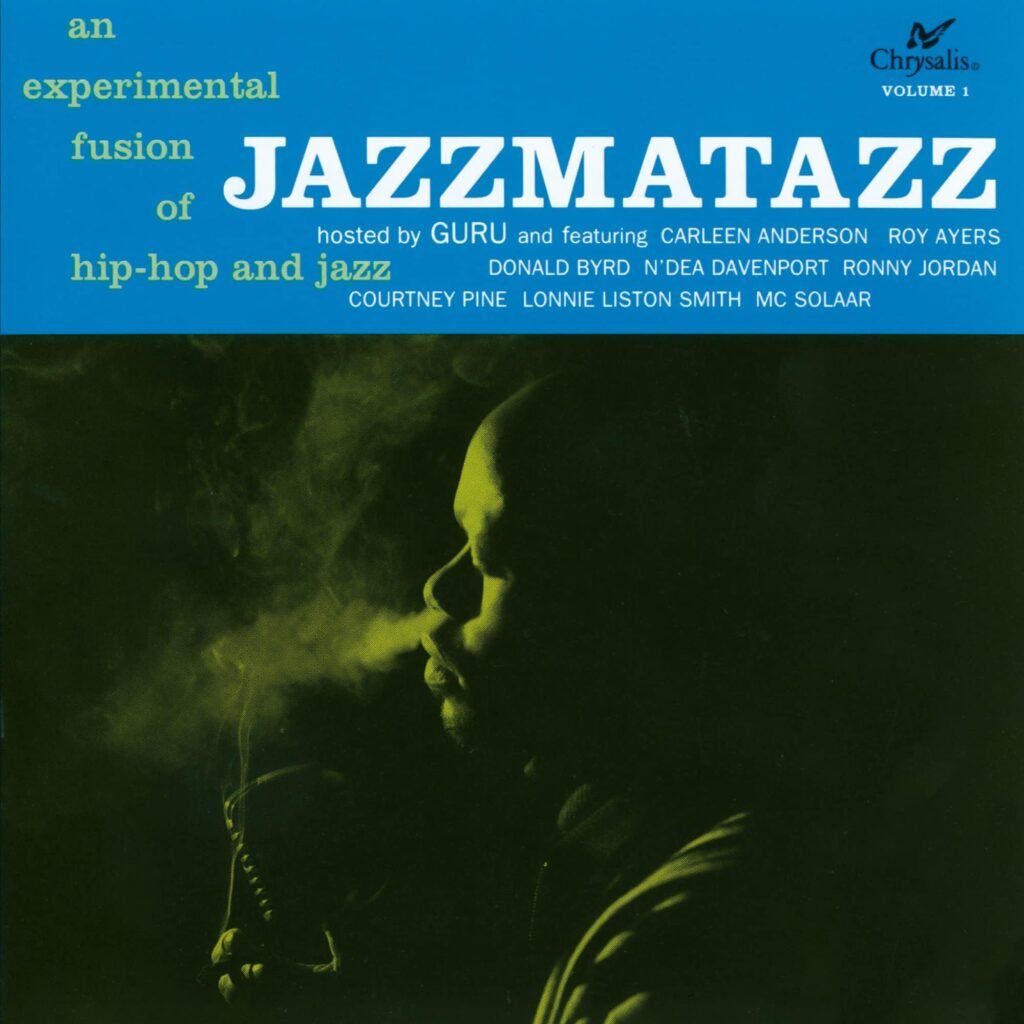
When Guru dropped Jazzmatazz, Vol. 1 in 1993, hip-hop was standing at a crossroads. On one end, you had the raw grit of Wu-Tang Clan reshaping New York rap, the conscious poetics of A Tribe Called Quest deep in their prime, and Nas sharpening his pen for what would soon be Illmatic. On the other, there was a growing appetite for fusion — for proving that hip-hop could hold weight in the company of established genres. Guru, already one-half of Gang Starr with DJ Premier, could’ve coasted comfortably on Premo’s beats and his own monotone wisdom. Instead, he set out to test a bigger idea: what if hip-hop didn’t just sample jazz, but invited jazz musicians into the room, live, to speak the same language in real time? The result was Jazzmatazz, Vol. 1, an album that broke barriers not with volume or aggression, but with groove, subtlety, and fearless curiosity. It’s not just a record; it’s a moment when two great Black traditions shook hands and shared a smoke.

The production details alone make Jazzmatazz historic. Guru helmed the project with an ear for collaboration rather than control. This wasn’t about chopping up Blue Note loops — it was about creating a living conversation. He recruited legends like trumpeter Donald Byrd, vibraphonist Roy Ayers, and saxophonists Branford Marsalis and Courtney Pine, then paired them with vocalists like Carleen Anderson, Dee C. Lee, and N’Dea Davenport.
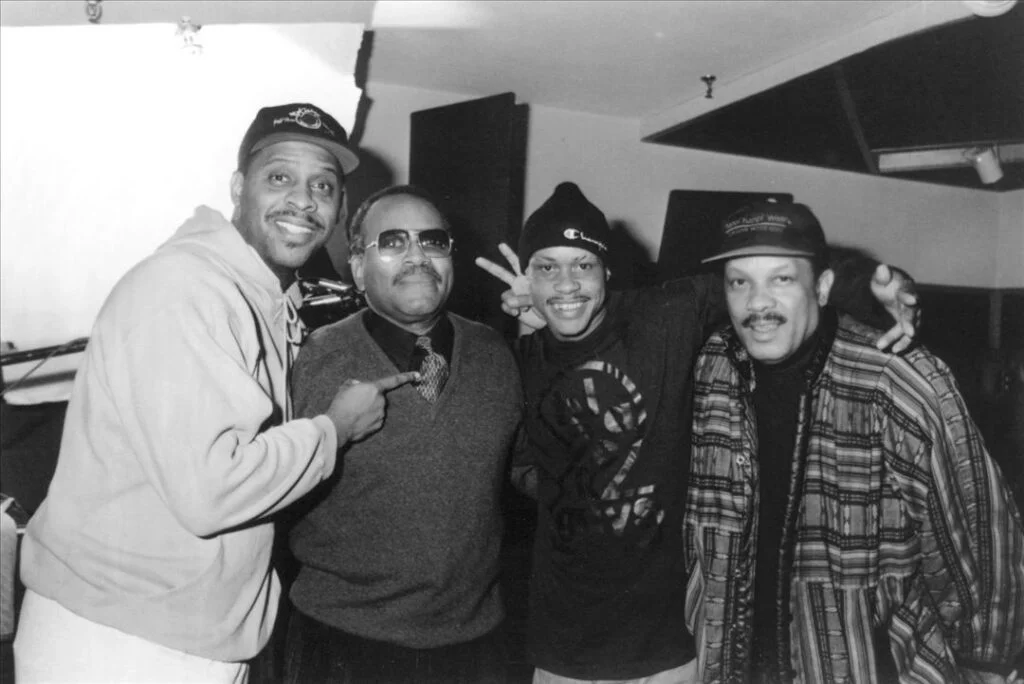
Instead of sterile studio stacking, many of the sessions carried the feel of a jam: musicians riffing around Guru’s verses, giving each track a pulse that no sampler could recreate. Even without DJ Premier’s fingerprints, the beats carried a steady, hypnotic drive, leaving room for the horns, keys, and voices to bloom. Guru’s gravel-toned delivery stayed front and center, anchoring the record with a mix of street pragmatism and poetic reach. He wasn’t trying to out-rap anyone; he was trying to prove that hip-hop could sit at the same dinner table as jazz and not spill the wine.

The magic of Jazzmatazz reveals itself track by track. Take “Loungin’,” the obvious flagship, where Donald Byrd’s trumpet dances like smoke rings over a bassline that feels like it’s been vibrating for centuries. Guru slides in smooth, reminding you that chilling out and soaking up vibes is as political as it is personal. Then there’s “No Time to Play,” with Dee C. Lee and Big Shug joining in. The groove is pure summer heat, Roy Ayers’ vibes shimmering in the mix, while Guru flips the eternal struggle of hustling versus living slow. “Trust Me” goes deeper — Carleen Anderson’s vocals turning the hook into gospel while Guru wrestles with themes of loyalty and vulnerability. It’s one of those rare rap cuts where the MC lets silence and space speak louder than bravado.
“Le Bien, Le Mal,” Guru’s duet with French rapper MC Solaar, is maybe the album’s boldest move. At a time when hip-hop was still seen by many as strictly an American phenomenon, Guru took it global, laying English and French verses side by side over a low-slung beat. The message? Hip-hop was already a world language, and jazz — universal by nature — was the perfect bridge. “Slicker Than Most” brings the energy back to the cipher, a sly reminder that Guru could still flex lyrical muscle when he wanted. And “Down the Backstreets,” closing the album, is pure noir — a smoky narrative about the shadows of city life, Branford Marsalis’ sax wrapping around Guru’s verses like a late-night confidant. These tracks don’t just stand out; they form a blueprint for what hip-hop could sound like when it dared to step outside the sample-based box without losing its roots.
Three decades later, Jazzmatazz, Vol. 1 still feels like a prophecy fulfilled. Its DNA runs through The Roots’ live-band ethos, D’Angelo’s organic neo-soul, Robert Glasper’s jazz-hip-hop experiments, and Kendrick Lamar’s To Pimp a Butterfly. Guru showed that collaboration wasn’t dilution, but expansion — that hip-hop could honor its jazz ancestry without turning into museum music. And beyond influence, the album just feels good. It’s a record you can study, spin at a lounge, or ride to with the windows down. So why should you, in 2025, still be listening to Jazzmatazz? Four reasons. First: it’s one of the smoothest bridges between two traditions that shaped Black music in the 20th century. Second: it’s a masterclass in restraint — proof that hip-hop can be laid-back and still deadly. Third: it’s timelessly global, anticipating the cross-border conversations hip-hop now thrives on. And fourth: because once you hear Donald Byrd’s horn slide over Guru’s voice, you’ll realize this isn’t just an album — it’s a communion, an eternal jam session that still has room for you.
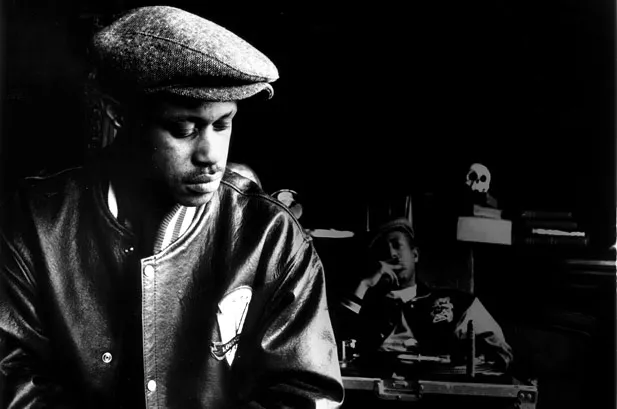
Tracklist — Jazzmatazz, Vol. 1 (1993)
1. Introduction — 0:48
2. Loungin’ (feat. Donald Byrd) — 4:38
3. When You’re Near (feat. N’Dea Davenport) — 4:02
4. Transit Ride — 3:58
5. No Time to Play (feat. Dee C. Lee, Ronny Jordan, and Big Shug) — 4:54
6. Down the Backstreets — 4:47
7. Respectful Dedications — 0:54
8. Take a Look (At Yourself) — 3:59
9. Trust Me (feat. N’Dea Davenport and Carleen Anderson) — 4:26
10. Slicker Than Most — 2:36
11. Le Bien, Le Mal (feat. MC Solaar) — 3:22
12. Sights in the City (feat. Courtney Pine, Carleen Anderson, and Branford Marsalis) — 5:10

 English
  Spanish
Tomas Angel Jimenez
17 de October de 2025
Buen artículo, además es un disco que tengo pendiente, lo tengo en CD y ando buscando copia original, no digo más!! Enorme artículo y enorme el disco