
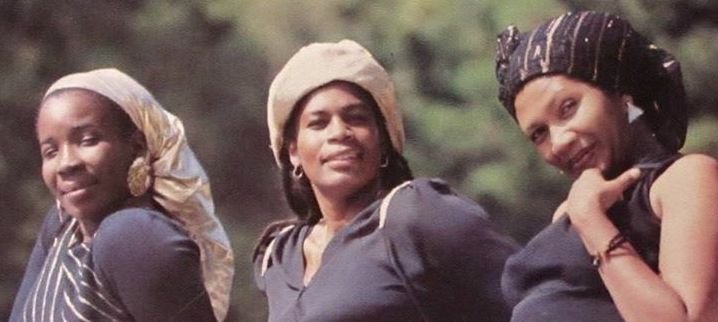
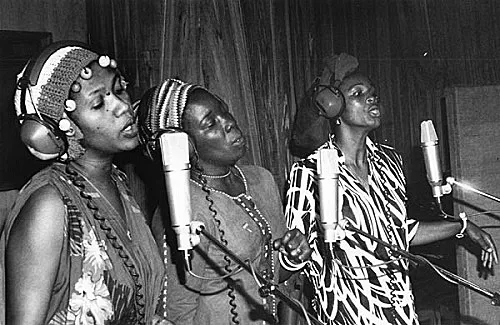
When Bob Marley needed a new sound to carry the Wailers into a fresh chapter, destiny answered in the form of three powerhouse women—Rita Marley, Marcia Griffiths, and Judy Mowatt. Each had carved her own space in Jamaica’s growing music scene long before the I-Threes became a name. Rita, born Alfarita Anderson in Santiago de Cuba and raised in Kingston, was steeped in gospel and the Rastafari spirit. She had recorded as part of the Soulettes and was already Bob Marley’s wife, bringing both intimacy and conviction to the music. Marcia Griffiths was known as the “Queen of Reggae,” with a velvet voice that had made waves in the sixties alongside Bob Andy in the duo Bob & Marcia, scoring international hits like Young, Gifted and Black. Judy Mowatt, meanwhile, had built a reputation as both a singer and songwriter, with roots in gospel and rocksteady groups like the Gaylettes. Influenced by soul greats such as Aretha Franklin, gospel harmonies, and the grounding rhythms of roots reggae, the three women came together in 1974. They met during studio sessions and performances on Kingston’s bustling circuit, and soon their chemistry became undeniable. When the Wailers lost Peter Tosh and Bunny Wailer, Bob turned to these women to form the new vocal backbone of his band. Thus, the I-Threes were born.
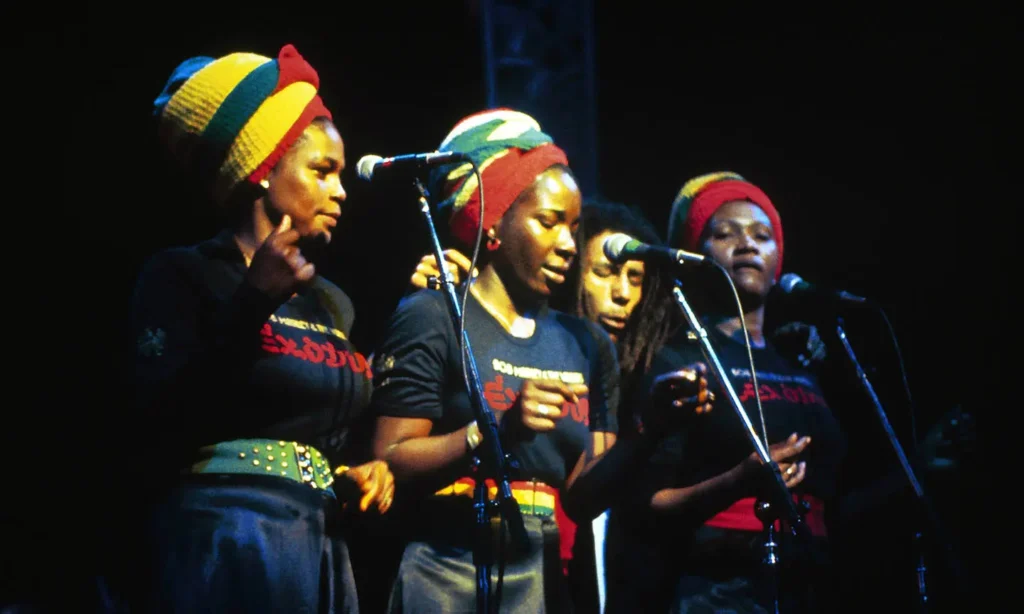
The I-Threes weren’t just backing singers—they were an instrument of their own. Their harmonies wove around Bob’s rough, prophetic voice like silk around stone. On Natty Dread (1974), their first album with Bob, songs like Them Belly Full (But We Hungry) and Lively Up Yourself carried an added layer of depth, with the I-Threes echoing and amplifying Marley’s revolutionary spirit. Their call-and-response style, rooted in gospel traditions, gave Bob’s music a communal feeling—it wasn’t just a man’s prophecy, it was the voice of a people. On stage, the I-Threes were pure energy: regal in their headwraps and African dress, they stood tall beside Bob and the Wailers, delivering not only harmonies but presence, poise, and power. They transformed live shows into rituals, especially on tours for Rastaman Vibration (1976) and Exodus (1977), where songs like War or Three Little Birds became chants of defiance and joy. Their success came from that balance: the softness of melody meeting the steel of resistance. They gave Marley’s music wings, carrying it to the peak of global recognition in the late seventies.
As the Wailers grew into one of the most important acts in the world, so too did the I-Threes develop as a group. Albums like Kaya (1978), Survival (1979), and Uprising (1980) showed their harmonies tightening, their performances sharpening, their role no longer just supportive but central to the Wailers’ sound. Yet, after Bob Marley’s passing in 1981, the I-Threes faced a natural decline. Without Bob at the center, the unity of purpose shifted. They performed together for tributes, festivals, and special concerts, but the intensity of their heyday faded. By the late eighties, the I-Threes were no longer an active group. Instead, each member pursued her own path, carrying the spirit of the I-Threes into solo projects and collaborations.
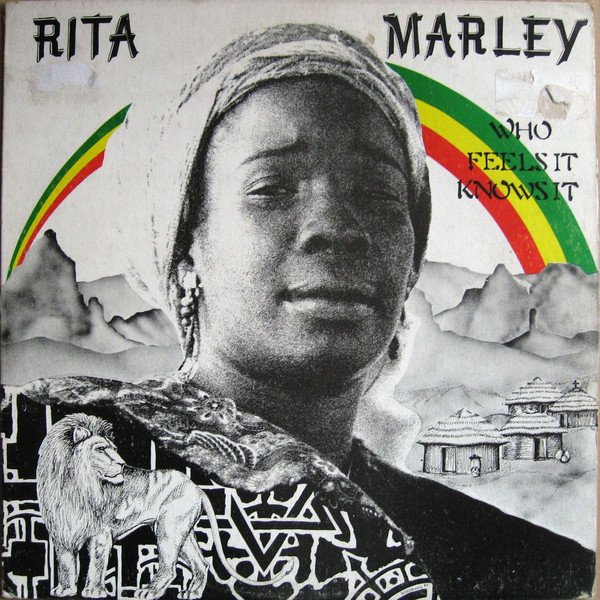
Rita Marley became the keeper of the flame, both musically and spiritually. She launched a solo career with albums like Who Feels It Knows It (1981), featuring the powerful anthem One Draw, which became a classic in reggae circles. Rita carried forward Bob’s legacy while establishing her own identity, blending roots reggae with messages of female empowerment and Rastafari faith. Beyond the music, she was instrumental in preserving Marley’s legacy—founding the Bob Marley Museum in Kingston, managing the family estate, and nurturing the careers of the Marley children, including Ziggy and the Melody Makers. Rita became more than a singer: she became a matriarch of reggae, a living bridge between its past and its future.
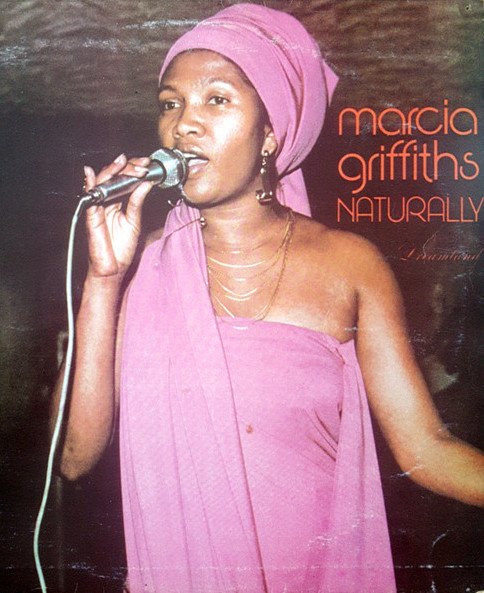
Marcia Griffiths, already celebrated before the I-Threes, soared even higher after. Her solo work in the eighties and nineties cemented her as reggae royalty. Albums like Carousel (1990) and songs such as Electric Boogie turned her into a crossover success—the latter spawning the global dance craze known as the “Electric Slide.” But it was her voice, always smooth, warm, and deeply rooted in soul, that kept her at the center of reggae’s evolution. Griffiths collaborated with the biggest names in the genre, from Beres Hammond to Buju Banton, proving her adaptability and timelessness. While many singers faded with the shifting tides of reggae, Marcia remained, her catalog both a testament to her longevity and a soundtrack for generations.
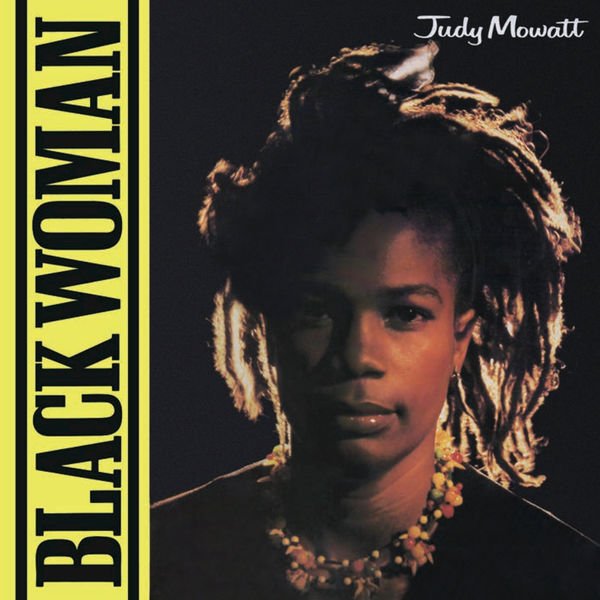
Judy Mowatt carved out perhaps the most critically acclaimed solo career of the trio. With Black Woman (1979), she delivered what many critics consider one of the greatest reggae albums ever recorded by a woman. Deeply political, spiritually rich, and sonically bold, the album positioned Judy as a force of her own. Later works like Working Wonders (1985) and her Grammy-nominated Rock Me (1997) confirmed her as a visionary. She became the first female reggae artist nominated for a Grammy, breaking barriers in a male-dominated scene. Judy’s music carried themes of liberation, faith, and Black womanhood, carving out a unique and enduring place in reggae history.
The I-Threes are more than a chapter in Bob Marley’s story—they are a story unto themselves. Their voices gave Marley’s music its communal power, transforming messages into movements, concerts into ceremonies. They showed the world that reggae wasn’t only a man’s voice but also the strength of women, carrying tradition, spirit, and rebellion in harmony. As a trio, they embodied the resilience of Jamaican women, turning gospel roots and soul influences into a weapon of sound. Their legacy is felt not only in reggae but in the global music landscape: every backing vocal trio in roots music carries their influence, and every woman in reggae owes them a debt. Today, their contributions echo in the works of modern artists, in the presence of Marley’s descendants, and in the enduring truth that reggae is at its most powerful when it is communal. The I-Threes didn’t just back Marley—they expanded his voice into the voice of a movement.
Bob Marley Discography Featuring the I-Threes (1974–1980)
• Natty Dread (1974)
• Live! (1975)
• Rastaman Vibration (1976)
• Exodus (1977)
• Kaya (1978)
• Babylon by Bus (1978, live)
• Survival (1979)
• Uprising (1980)
• Confrontation (1983, posthumous recordings with their vocals)
I-Threes Solo Career Highlights
Rita Marley
• Who Feels It Knows It (1981)
• Harambe (Working Together for Freedom) (1982)
• We Must Carry On (1991, Grammy-nominated)
• Key track: One Draw
Marcia Griffiths
• Marcia Griffiths Naturally (1978)
• Carousel (1990)
• Certified (1991)
• Global hit: Electric Boogie (originally 1983, became a dance craze in the late ’80s/’90s)
Judy Mowatt
• Black Woman (1979)
• Only a Woman (1982)
• Working Wonders (1985)
• Rock Me (1997, Grammy-nominated)
 English
  Spanish