
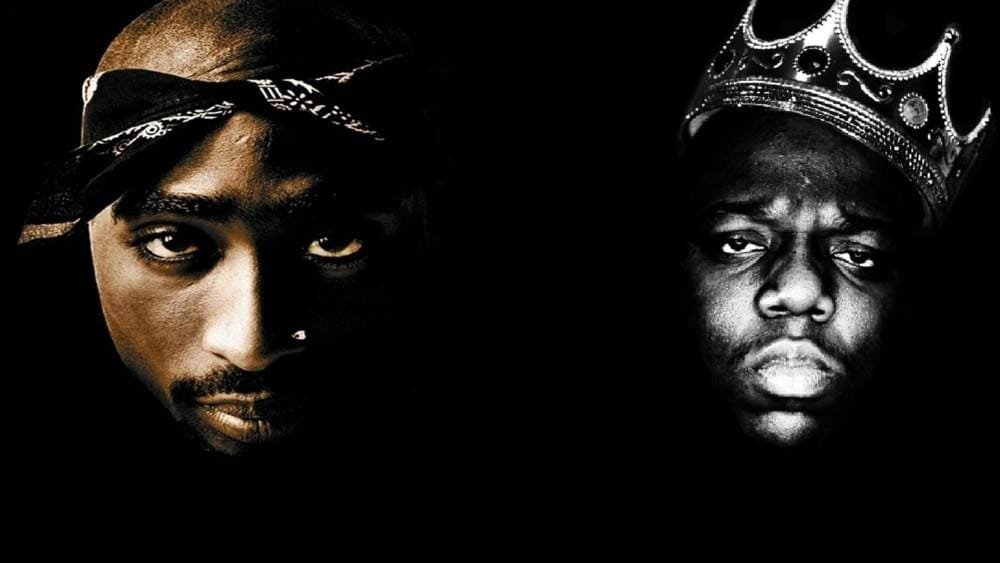
There are stories in hip hop that feel larger than music—stories that define eras, redraw boundaries, and leave a permanent mark on culture. The intertwined journeys of Tupac Shakur and The Notorious B.I.G. sit right at the center of that conversation. Not just because of how they lived or how they died, but because of what they created in between: a body of work that pushed hip hop into new emotional, technical, and commercial territory.
This isn’t just a story about rivalry. That’s the surface-level narrative—the one headlines love. Underneath, this is about evolution. Two artists from opposite coasts, shaped by different environments, channeling distinct energies into the same art form. Pac, the revolutionary poet, raw and immediate. Biggie, the master craftsman, calculated and fluid. Different approaches, same mission: to tell the truth of their worlds, unapologetically.
Their rise happened at a pivotal moment, when hip hop was transitioning from a regional movement into a global force. Labels like Death Row Records and Bad Boy Records weren’t just businesses—they were power structures shaping sound, image, and narrative. And at the center of that machine stood these two figures, carrying not just their own ambitions, but the weight of entire coasts.
What makes this story essential isn’t just the music—though the catalog alone would justify it. It’s the tension between artistry and industry, expression and ego, unity and division. It’s how quickly admiration turned into suspicion, and how that shift reshaped the culture.
This article isn’t here to pick sides. It’s here to trace the full arc—from alignment to fracture, from creation to consequence—and to understand how Tupac Shakur and The Notorious B.I.G. didn’t just define hip hop in the ‘90s—they changed its trajectory forever.
 English
  Spanish