
There is something deeply paradoxical about the birth of Afrofuturism. A movement that imagined spaceships, extraterrestrial civilisations, advanced technology and impossible futures was born, to a large extent, from a question about the past. What happens when a people have had much of their history taken away? When names are lost, languages are broken, genealogies disappear, and the official version of history decides who deserves to be remembered and who doesn’t. For centuries, the African diaspora had to reconstruct its identity from fragments. The blues preserved voices. Gospel preserved faith. Jazz turned improvisation into a form of freedom. And at some point, certain musicians decided that perhaps looking backwards wasn’t the only way to recover what had been lost. Perhaps they needed to look forwards.
Long before anyone used the word Afrofuturism, that intuition was already there: the future could become a territory of its own. And that’s where one of the most fascinating stories in twentieth-century Black music begins. Because while much of Western culture imagined the future as robots, metallic cities and interplanetary travel, some Black artists were doing something far more profound: they were using the future to recover an identity that the past had fractured. This wasn’t escapism. It was imaginative survival. And if you listen to this music with the patience of someone lifting a record from a second-hand crate, turning it over and studying the sleeve before placing it on the turntable, you begin to understand that behind all that space-age imagery was a very human question: who could we become if nobody else had the right to tell us who we are?
To find the first pieces of this puzzle, we have to go back to the 1940s and 1950s, to a time when jazz was ceasing to be simply music and becoming a way of thinking. Improvisation already contained an essentially futuristic idea: creating something that had not existed a second earlier. But there was also a generation of Black intellectuals and writers who had spent decades questioning the way history had represented Black people. W. E. B. Du Bois, in The Comet (1920), had already imagined a catastrophe from outer space that forced two characters, a Black man and a white woman, to confront their prejudices in a world stripped down to its most basic elements. Decades later, writers such as Octavia E. Butler would take that conversation much further. But in music, something extraordinary was happening. Jazz was becoming a kind of laboratory for imagining other realities. And then came a man who had absolutely no interest in accepting the rules of the planet he had been given. Sun Ra didn’t simply play jazz. He built a universe.
Born Herman Poole Blount in Birmingham, Alabama, he transformed his own identity into Sun Ra, a figure who spoke of Saturn, ancient Egypt, cosmic civilisations and a humanity capable of escaping its own limitations. Some considered him eccentric; others, a visionary. He was probably both. But the truly radical part was the gesture itself. In a society that had pushed Black Americans to the margins of their own national story, Sun Ra didn’t ask for permission to enter it. He simply invented another story. His Arkestra could sound like a big band arriving from an unknown galaxy, but underneath the layers of free jazz, primitive electronics, percussion and ritualistic voices was a simple, explosive idea: imagination is political territory too.
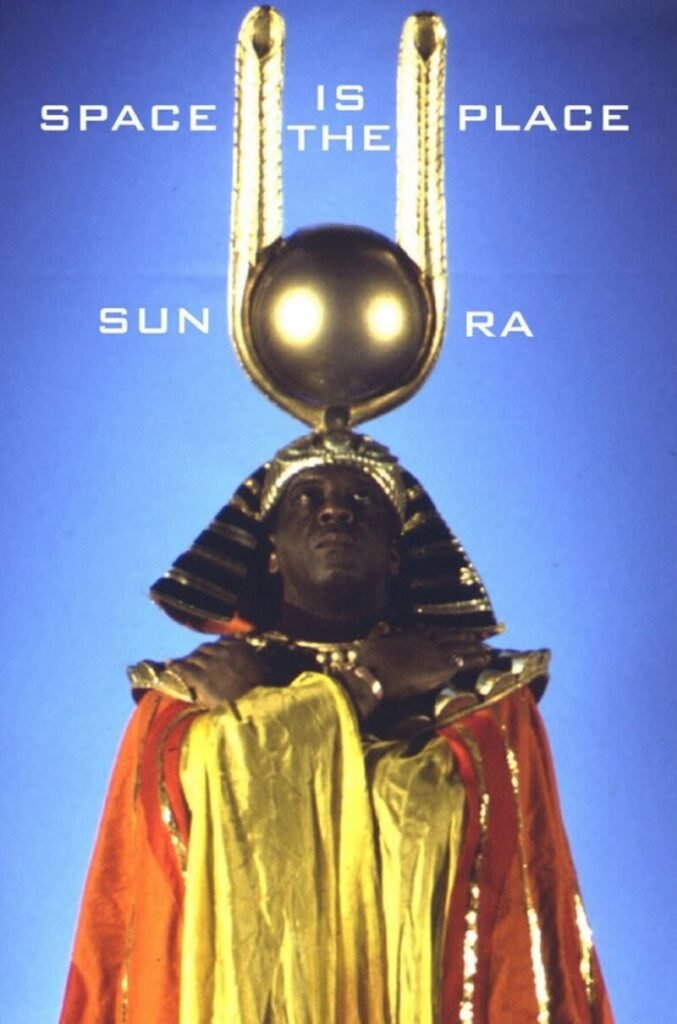
If Jazz in Silhouette (1959) opened a door, The Heliocentric Worlds of Sun Ra (1965) practically knocked down the wall. This was no longer a musician using space imagery as decoration. Sun Ra was building an entire cosmology. And that matters because Afrofuturism was never simply an aesthetic. The costumes, spaceships, planets and extraterrestrial names were the visible surface of a much deeper conversation about identity, power and freedom. When Sun Ra claimed to come from Saturn, he was playing with the idea of origins. If the dominant historical narrative could decide that Black history began with slavery, why couldn’t he choose another point of departure? Outer space became a promised land, but it was also a metaphor. A way of saying: I don’t accept the limits you’ve built around me. And this is where we need to pause for a moment, because there is something profoundly musical about that idea. Jazz had always been capable of transforming a seemingly fixed structure into something else. A melody could be repeated and yet never sound exactly the same. Sun Ra did the same thing with identity. He took it apart, rearranged it and rebuilt it in another universe. When Space Is the Place arrived in 1973, accompanied by a film that turned the whole mythology into an audiovisual experience, the concept was fully formed. Space was no longer some distant destination. It was a possibility of liberation.
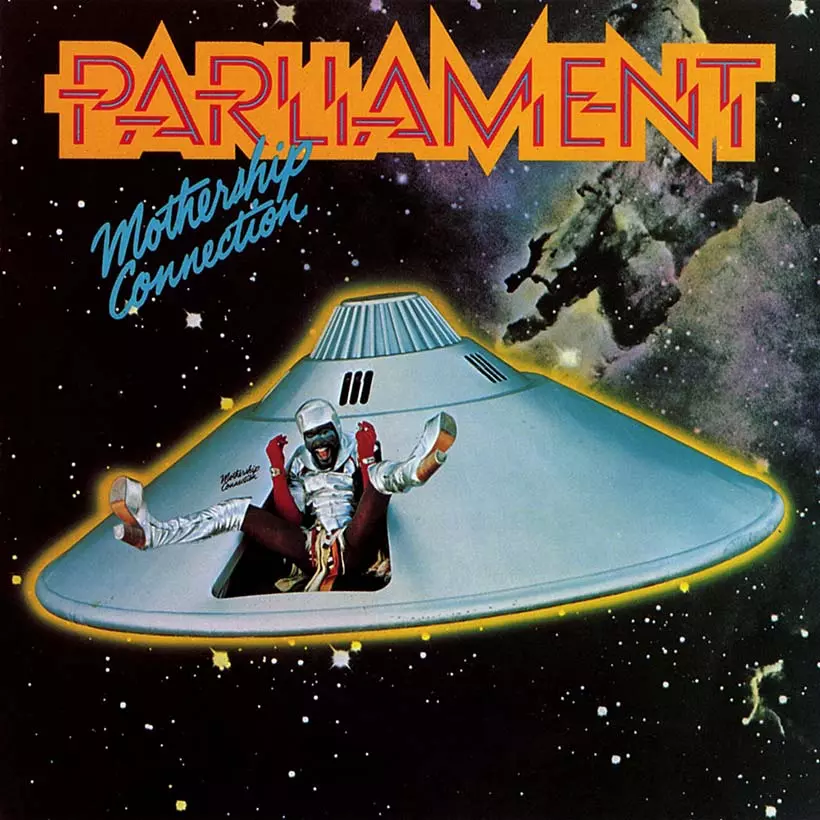
And then the story took another wonderful turn: that cosmic vision began to collide with funk. George Clinton, through Parliament and Funkadelic, took some of that imagery and brought it straight down into the body. If Sun Ra had built a spaceship to escape the planet, Clinton decided to land it directly on the dancefloor. Mothership Connection (1975) turned Afrofuturism into groove. The Mothership, Sir Nose, Starchild and the rest of that mythology looked like characters from some psychedelic comic book, but underneath it was an extraordinarily serious idea: imagining a future in which Black people were no longer condemned to the margins. Funk could be sexy, funny, extravagant and political all at once. And perhaps that was one of the movement’s greatest contributions: understanding that liberation doesn’t always have to arrive wearing a serious face. Sometimes it comes with a monstrous bassline, a synthesizer and a spaceship hovering above the stage.
From there, technology began to change the vocabulary. And this is where Afrofuturism stops being purely a visual philosophy and becomes a way of thinking about sound itself. Synthesizers, drum machines, sequencers and, later, samplers offered musicians something that jazz and funk had already been pursuing for decades: the ability to manufacture landscapes that didn’t exist in nature. Herbie Hancock immediately understood the potential. On Sextant (1973), with The Headhunters, jazz collided with still-experimental electronics, while a decade later Future Shock (1983) would push that relationship directly towards hip hop, turntablism and MTV’s audiovisual culture. “Rockit” sounded as though the future had walked through the back door of a jazz party.
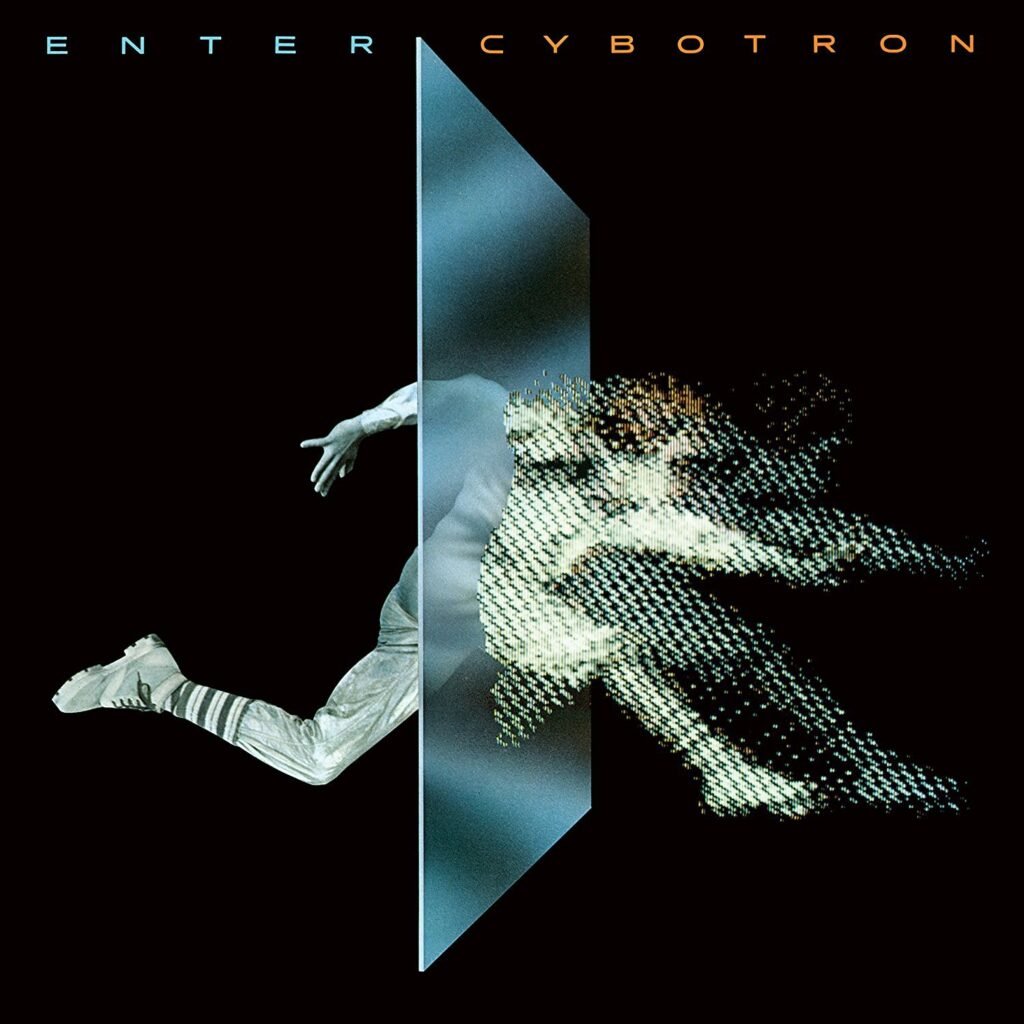
But the next revolution would happen in Detroit. There, during the late 1970s and 1980s, three young men — Juan Atkins, Derrick May and Kevin Saunderson — were listening to Kraftwerk, Parliament and an entire tradition of electronic music while looking out at a city that seemed to be living through its own dystopian future. Factories were closing. Machines were replacing workers. The city that had once been one of America’s great industrial engines was beginning to show the scars of automation. Atkins, under names such as Cybotron and Model 500, began imagining music that sounded as though it had come from a Detroit several decades ahead of its time. Techno wasn’t born simply because someone discovered a synthesizer. It emerged from a conversation between technology, the city, race and imagination. In that sense, it was pure Afrofuturism. And what’s beautiful is the way those ideas continued to travel. From Detroit to Chicago, from techno into experimental electronics, from clubs into the studios of producers who were beginning to use samplers as archaeological machines. Technology stopped being a tool associated exclusively with a white European future. The African diaspora could program machines too, design futures and build its own imaginary cities. And perhaps that’s why the history of Afrofuturism is so intimately connected to the history of musical technology. Every new machine opened another door. Every new sound made it possible to imagine another version of ourselves.
But Afrofuturism didn’t stay in outer space. And this is where the story becomes even more interesting. In the 1990s, projects such as Drexciya began constructing a new mythology around the ocean. The story they developed imagined enslaved African women thrown into the Atlantic during the Middle Passage giving birth to children capable of breathing underwater. Those children supposedly built an underwater civilisation called Drexciya, far from the violence of the world above the surface. The idea was brutal and beautiful at the same time: to transform one of the greatest tragedies in the history of the African diaspora into the origin story of a new civilisation. Electronic music became the vehicle for telling that story without ever needing to explain it literally. Drexciya’s underwater techno sounded as though it were coming from another planet, even though that planet was beneath the ocean.
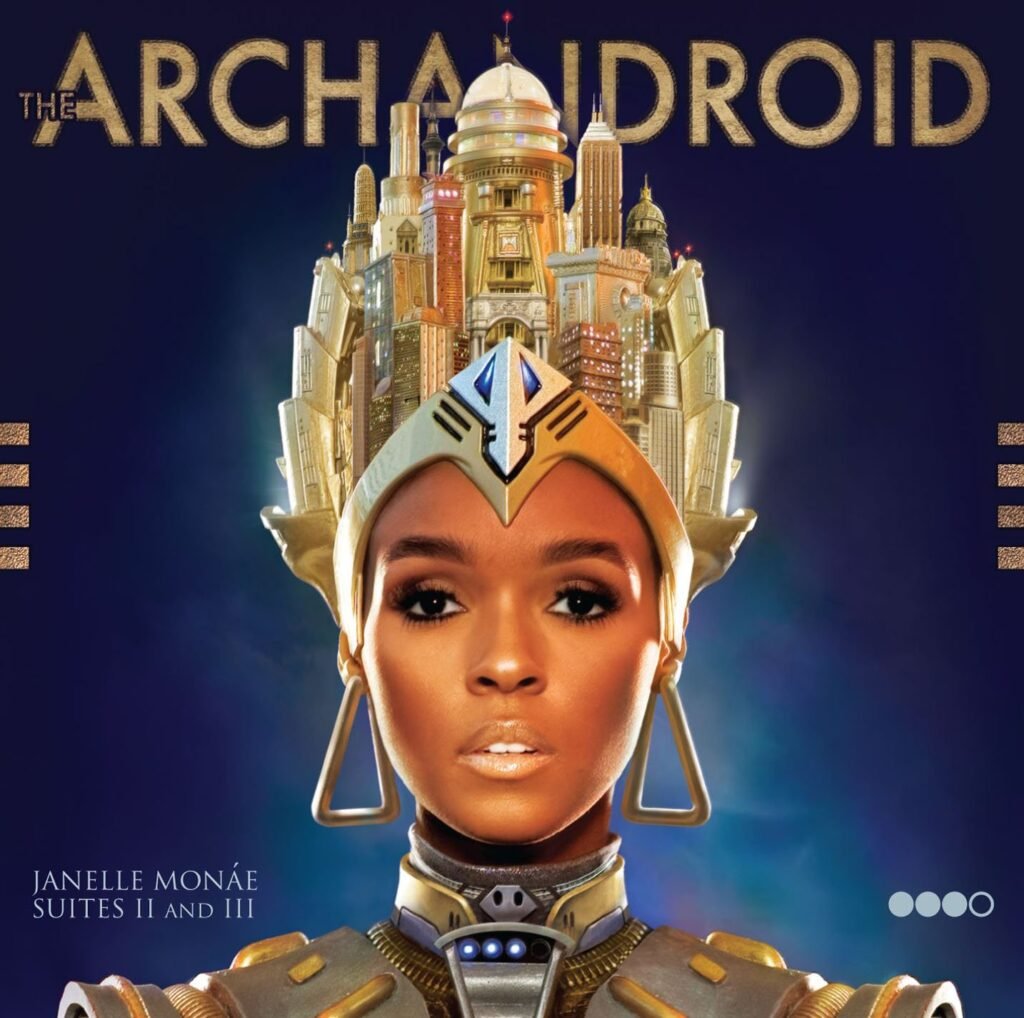
From there, the movement continued to mutate. Janelle Monáe would bring the figure of the android back into the conversation, using it to explore identity, control, gender and freedom in the twenty-first century. Flying Lotus would connect electronics, hip hop, jazz and spirituality on Cosmogramma. Moor Mother, Shabaka Hutchings and a new generation of contemporary artists would continue using Afrofuturism as a space in which to confront history and the present. Even when there are no spaceships on the cover anymore, the idea remains. Because Afrofuturism never really depended on flying saucers. It depended on the ability to imagine a different reality. And that’s why it has survived for so many decades. Every generation finds its own machines, its own fears and its own futures. Sun Ra had Saturn. Parliament had the Mothership. Detroit had robots and factories. Drexciya had the ocean. Monáe has androids. But underneath all those images runs the same underground current: the need to imagine a place where Black identity can exist without being permanently defined by the wounds of the past. The future becomes a kind of blank territory. A place where the rules have not yet been written.
And perhaps that’s the real reason Afrofuturism continues to move us. Because ultimately, it isn’t really about the future. It’s about freedom. It’s about what happens when a person, a community or a culture decides that the history others have written about them is not the final version. That’s why listening to a Sun Ra record today can still feel so powerful, knowing that the music was conceived more than half a century ago. The synthesizers may sound old, the recordings may carry their own dust, and some of those visions may seem naive from the perspective of our technological age, but the question remains untouched. Who has the right to imagine tomorrow?
Perhaps that is the real battle. Because whoever can imagine a future can also imagine themselves inside it. And that’s exactly what those first architects of Afrofuturism did. They took jazz, funk, electronics, African mythology, science fiction, spirituality and technology, put them all in the same box and decided that the boundaries could be broken. Like a good crate digger lifting the lid of a box without knowing what lies underneath, they searched through the remains of the past until they discovered that there was a future hidden there too. And perhaps that’s the most beautiful paradox of all: to build the future, they had to become archaeologists of their own memory. Today, we still put those records on the turntable and hear spaceships, machines, planets and impossible civilisations. But if we listen carefully, underneath all that cosmic noise there is something much closer to home. There is a voice saying that nobody should have the power to decide how far our imagination is allowed to travel. And when the needle drops into the groove, for a few minutes, that future stops being fantasy. It becomes music. And music, as it always has, reminds us that we are still in time to invent who we are going to become.
6 Essential Records for Understanding Afrofuturism
1. Sun Ra — Space Is the Place (1973): The Ground Zero of Musical Afrofuturism
This is the record that perhaps captures the complete Afrofuturist philosophy better than any other: space, Black identity, Egyptian mythology, spirituality, science fiction and emancipation. Sun Ra turns the cosmos into an alternative to the historical narrative imposed from the outside. More than an album, it functions as a manifesto: the future belongs to the African diaspora too.
2. Parliament — Mothership Connection (1975): When Afrofuturism Leaves the Avant-Garde and Lands in Popular Culture
George Clinton does something decisive here: he takes Sun Ra’s cosmic ideas and transforms them into funk, humour, characters, fashion and spectacle. The Mothership becomes one of the most recognisable symbols of Afrofuturism. More importantly, Mothership Connection proves that a philosophical idea can become popular culture without losing its depth.
3. Cybotron — Enter (1983): The Moment Afrofuturism Enters the Age of Machines
This is where a fundamental transformation takes place. Juan Atkins takes Sun Ra’s cosmic imagination and Parliament’s electronic funk and drops them into the industrial landscape of Detroit. The future is no longer simply about outer space; it becomes urban, technological and mechanical. Without Enter, it is difficult to explain the subsequent development of Detroit techno and, by extension, a huge part of contemporary electronic music.
4. Drexciya — The Quest (1997): Afrofuturism Discovers It Doesn’t Have to Look to the Stars
Drexciya pulls off an extraordinary conceptual operation: transforming the history of the transatlantic slave trade into an underwater science-fiction mythology. Historical trauma becomes the origin story of an alternative civilisation.
It is probably one of the most radical examples of Afrofuturism as an act of reconstructing memory. Musically, it also pushes Detroit techno into a much more abstract, darker and experimental territory.
5. Janelle Monáe — The ArchAndroid (2010): Afrofuturism Fully Enters the 21st Century
Monáe takes everything that came before — Sun Ra, Parliament, funk, soul, electronics and science fiction — and transforms it into a narrative about identity, freedom, gender, technology and social control.
The android Cindi Mayweather replaces the spaceship as the central metaphor. Afrofuturism stops asking only, “Where will we be in the future?” and starts asking the much more personal question: “Who will we be allowed to become?”
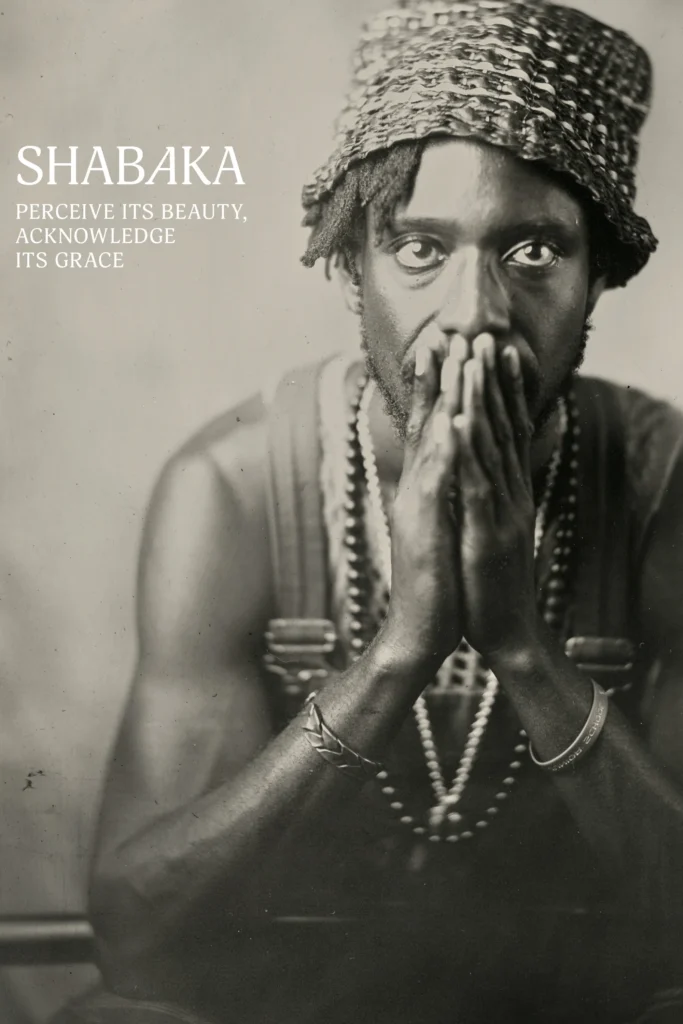
6. Shabaka — Perceive Its Beauty, Acknowledge Its Grace (2024): Afrofuturism Becomes Spiritual Again
Shabaka Hutchings brings together jazz, electronics, flutes, ambient music and spiritual traditions from different cultures. It’s a deliberately contemporary choice, because it shows that Afrofuturism is still evolving — and that it no longer necessarily needs spaceships or robots to imagine the future. The future can also be inner, ancestral and spiritual.
 English
  Spanish