When Listening to Music Was an Adventure and Every Record Had a Story to Tell
Every now and then, usually when I’ve got a record in my hands and the needle has just dropped into the groove, I find myself asking a question: what exactly have we gained by having all the music in the world just one click away? It’s not a trick question, nor an invitation to become one of those old grumps who think everything was better back in the day. It would be ridiculous to deny the possibilities technology has given us. Today, you can be having breakfast in some corner of the world, look up an Ethiopian soul track from the seventies, jump to a spiritual jazz record recorded in Chicago, and finish off with a Brazilian production that, not so long ago, would have been practically impossible to find without knowing the right person. All in a matter of minutes. Incredible when you think about it.
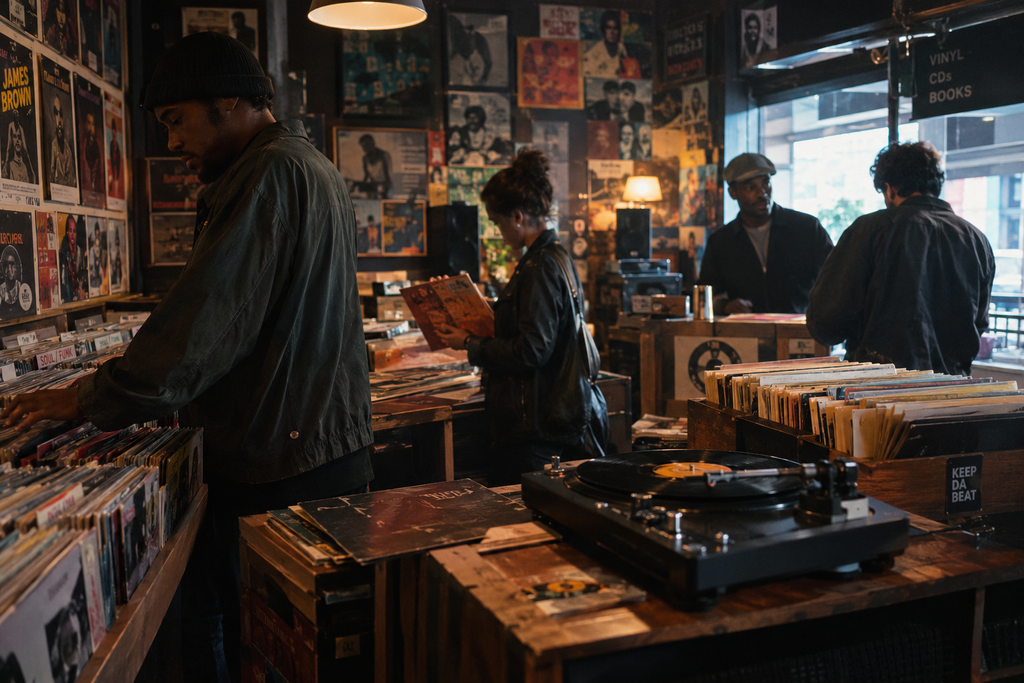
But there was a time when music wasn’t waiting for you behind a screen. You had to go looking for it. You had to walk into a record shop, dig through cardboard boxes, ask the bloke behind the counter, exchange information with other heads and, more often than not, go home empty-handed. The search was part of the listening experience. Discovering an artist wasn’t simply a matter of receiving an algorithmic recommendation; it was a small personal victory. A mate told you about an album, you caught a tune on the radio at three in the morning, or you spotted a sleeve in a shop for five seconds and couldn’t get it out of your head for weeks. Music had its own geography, economy and even a social dimension that’s difficult to explain today. It depended on where you lived, how much money you had, which radio stations you could pick up and, above all, the people you shared that obsession with. Not everyone had access to everything, and that was precisely why certain records acquired an almost mythical status. Before streaming, listening to music was also about learning how to find it, developing patience and accepting that sometimes the treasure was hiding in the next crate.
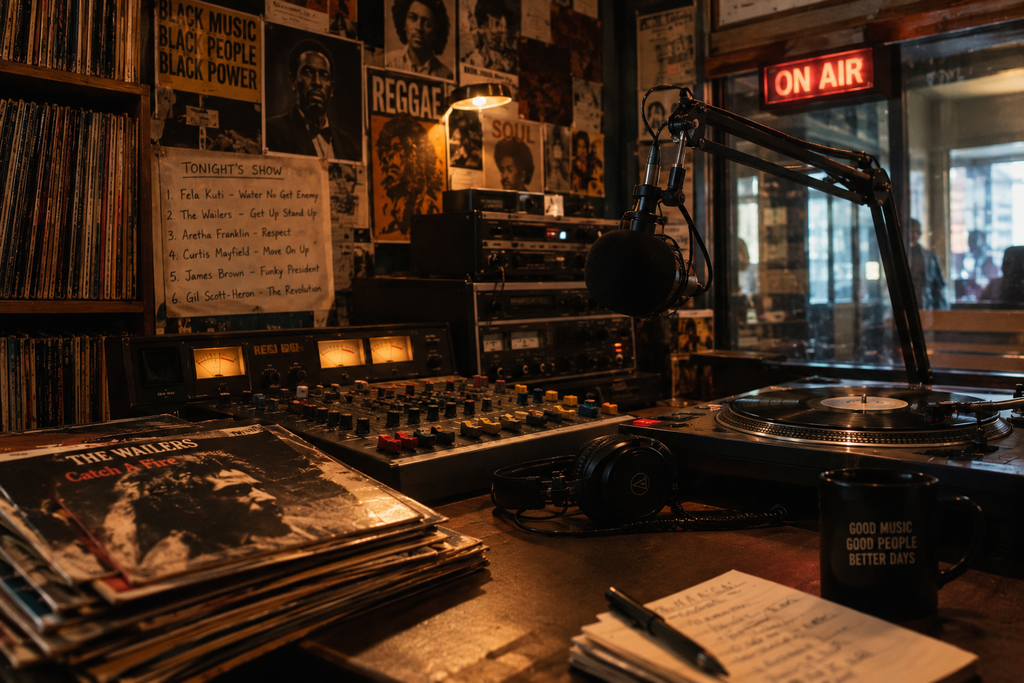
Before a platform decided which song should accompany our mood, there was a network of human tastemakers that worked remarkably well. The radio DJ who slipped a B-side into the playlist at some ungodly hour, the shop assistant who knew your taste better than you did, the club DJ carrying a bag full of imported records, or that mate who always turned up with something nobody else had heard. These people were our recommendation system, although nobody needed a fancy name for it. Radio played a crucial role, particularly in spreading genres that struggled to find space in mainstream commercial channels. Soul, funk, reggae, hip hop and so many other musical expressions grew through communities, radio stations, clubs and people sharing music long before sharing meant pressing a button. Think of Jamaican sound system culture, New York radio DJs who helped shape hip hop, or American college radio stations that opened their microphones to sounds commercial radio largely ignored. Music travelled through human channels, and every person along the way added something of their own. A recommendation came with a story, an opinion, an argument or a warning: “Listen to the second track on side B, that’s where it really kicks off.” And, of course, you listened.
Then there were record shops, places that were far more than retail outlets. You walked in looking for one album and walked out with three recommendations, a conversation about a Detroit record label and a mental list of artists you needed to investigate. The best shop assistants were genuine musical archaeologists. They knew catalogues, musicians, session players, producers, independent labels and connections that turned a discography into a map. There wasn’t a screen calculating your preferences from thousands of data points. There was a person who remembered what you’d bought the previous month and, when you walked through the door, held up a record because they knew it would be right up your street. There was something irreplaceable about that kind of recommendation: someone had invested time in getting to know you. And when music circulates that way, it stops being just content. It becomes a relationship between people.
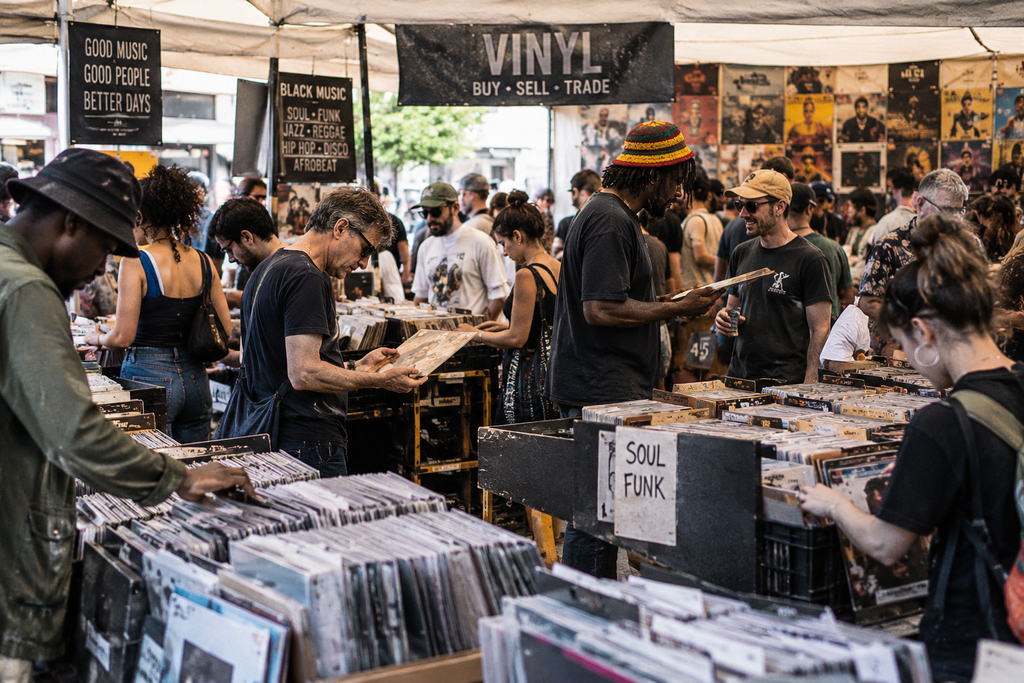
The format also shaped our relationship with music. Buying an LP wasn’t exactly a casual purchase, especially when you were twenty and every penny had other places to go. You had to choose. You might listen to an entire album in the shop, if they let you, read the lyrics, study the credits and examine the sleeve before deciding whether it was worth the sacrifice. When you finally took it home, that purchase had both literal and emotional weight. The record took up space, needed looking after and constantly reminded you that you’d invested in a particular piece of work. You weren’t buying a song to play for three minutes while doing something else. More often than not, you were buying an entire universe. The sleeve, artwork, photographs, inner notes and musicians’ names all helped build it. And the credits, those little blocks of information that too often go unnoticed, could open unexpected doors. You discovered that the bass player on a funk album had also played on a soul session; that an arranger appeared on a jazz record you’d never heard of; that a producer had connected artists who seemed worlds apart. That’s how one of the most beautiful aspects of collecting begins: following someone’s trail across different recordings and realising that music history is built on encounters, shared work and chance discoveries. Listening also required a certain physical commitment. You had to take the record out of its sleeve, hold it by the edges, place it on the turntable, clean off the dust when necessary and lower the needle.
Then came the little ritual of sitting down, getting up to flip the record or letting the album play while the room took on a different atmosphere. Of course, not everyone listened that way, and it would be ridiculous to romanticise an era when records also gathered dust, stereo systems could be rubbish and albums were sometimes bought for just one song. But the physical format introduced a certain friction that, on occasion, worked in music’s favour. You couldn’t skip from track to track quite so effortlessly, which encouraged you to spend time with songs you wouldn’t initially have chosen. Sometimes the track that eventually won you over was precisely the one you hadn’t gone looking for. The album taught you patience, even if nobody presented it as a lesson.
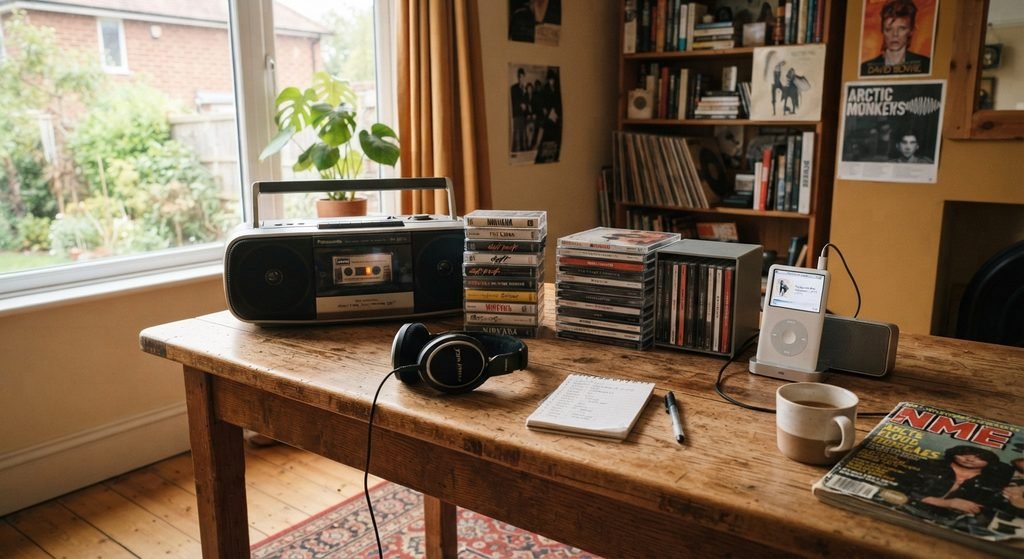
It would be a mistake to tell this story as if everything was vinyl until Spotify came along and ruined it all. Long before streaming, every technological revolution had already changed the way we listened. The cassette made it possible to take music anywhere, record radio shows, copy records and put together personalised compilations. Mixtapes became a form of expression in their own right: selecting songs, arranging shifts in energy, building a narrative and handing someone else a little piece of your musical world. A good mixtape could be a declaration of love, an introduction, a personal diary or a compressed DJ set captured on a sixty- or ninety-minute tape. It also democratised the circulation of music, even if the sound quality deteriorated and tapes inevitably got tangled at the worst possible moment. Then came the CD, with its direct track access, digital sound and portability that changed listening habits. Later, MP3s and file-sharing programmes broke down many of the barriers surrounding music distribution. Suddenly, a collection that once required rooms, shelves and years of searching could fit on a hard drive. Napster and the networks that followed radically altered the relationship between audiences, the record industry and music ownership. Access began to separate itself from possession. You no longer needed to own an album to listen to it, or even buy it to discover it. Streaming took that logic much further: it turned near-unlimited availability into the norm and shifted much of the economic value away from individual purchases towards subscriptions and monetised plays.
Every advance solved real problems. Music became more accessible, more portable and, in many ways, more democratic. A young person with a phone can now explore catalogues that would have seemed unimaginable to a collector forty years ago. But every solution changes our habits, too. When listening takes less effort, we can listen to more music without necessarily paying more attention. When the catalogue seems infinite, choosing becomes a permanent task. And when music plays through an interface designed to keep us engaged, listening risks becoming confused with simply having sound in the background. That’s not technology’s fault in itself. The problem begins when we confuse ease of access with depth of experience. We can have ten million songs available and still listen to the same twenty over and over again. Abundance doesn’t guarantee curiosity; it merely gives us the opportunity to exercise it.
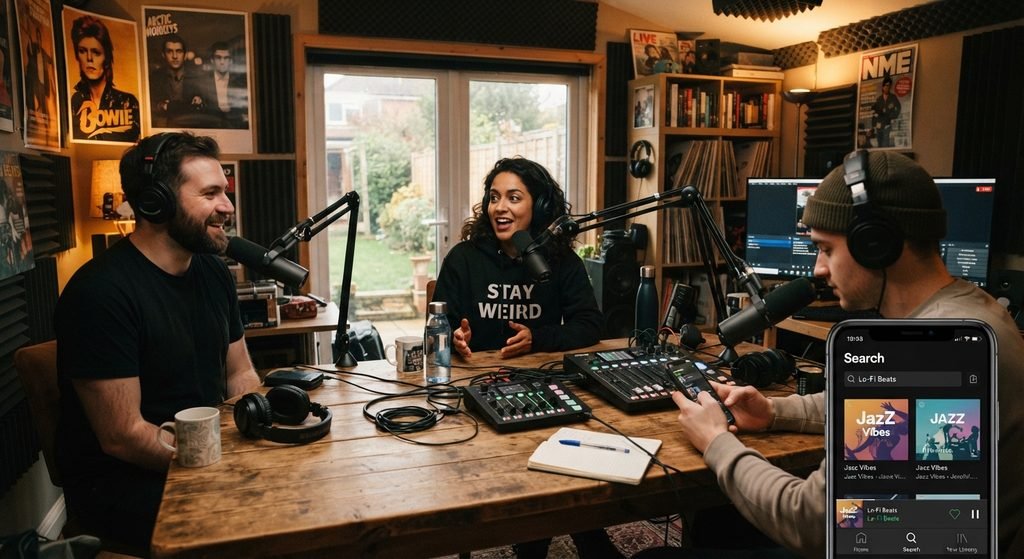
There’s something fascinating and something unsettling about the way platforms organise music. On the one hand, they’ve broken down geographical and economic barriers. Today, you can explore independent label catalogues, listen to recordings from countries you’ve never visited and discover artists who would never have reached your local record shop. For those of us who love Black music in all its different forms, this is an extraordinary research tool. You can start with Curtis Mayfield, follow the trail of his musicians, jump to a Latin soul production, find a Japanese jazz-funk album and end up listening to an African obscurity released by a tiny label. The journey can be incredible. However, platforms aren’t neutral libraries. Their interfaces, recommendations and editorial playlists influence what we find, while their catalogues and metadata have gaps of their own. Automatic recommendations can help us discover music, but they can also turn our previous tastes into a kind of familiar room. If you listen to funk, you get more funk; if you keep playing a song, the system learns that it should offer you similar experiences. Sometimes it gets it spot on. Other times, discovery becomes a succession of variations on what you already know. There’s another issue, too: music has a history, but platforms tend to present it as a continuous stream of songs available for immediate consumption. A recording appears alongside thousands of alternatives, detached from the circumstances in which it was created, the small record label that released it or the social context that gave it meaning. Credits can be incomplete, different editions can be difficult to distinguish, and recordings that have gone out of print or were never digitised may remain beyond our reach. In that sense, streaming makes listening easier, but it doesn’t always make understanding easier.
This is where the crate-digger mentality comes in, even when there isn’t a physical crate in front of you. Searching by record label, producer, musician, year, studio, version and collaboration is still a way of listening actively. Reading, cross-checking information and following connections allows you to step outside the predictable recommendation loop. And, of course, buying physical records still makes sense if you want to support particular artists, own a specific edition or establish a tangible relationship with music. There’s no need to pit one world against the other. Streaming can be the map; vinyl can be the territory you decide to explore at your own pace. A playlist might lead you to an unfamiliar song, but the real journey begins when you decide to find out who recorded it, who played the bass, which label released it and why that sound still speaks to you so many years later. Technology opens the door. Curiosity decides whether you walk through it.
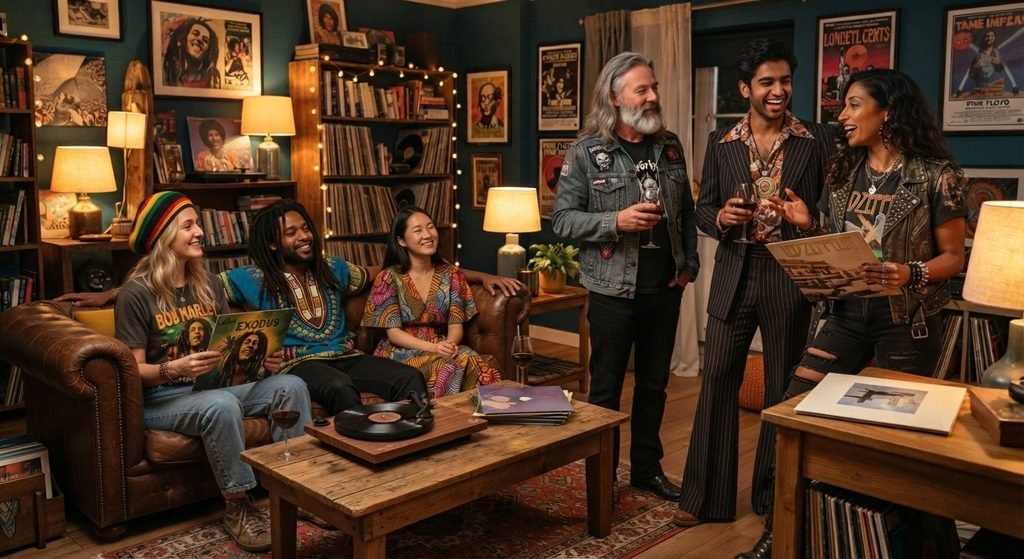
Perhaps the most important difference between listening to music before streaming and listening to it now has less to do with formats than with memory. Some records remind us of where we were when we first discovered them, who introduced us to them and what was happening in our lives at the time. We remember that shop that closed down, the mate who moved abroad, the first party where we heard a particular tune, or the afternoon we bought an album without knowing it would stay with us for decades. Music becomes a kind of emotional archive, and the objects surrounding it act as little time capsules. A forgotten price sticker on the sleeve, a handwritten dedication, a worn-out cover or the name of a shop that no longer exists can take us back to a place we thought we’d lost. But we don’t need to own thousands of records to experience that connection. A song heard on a phone can change our lives; a track discovered through an automatic recommendation can open up an entire world. Nostalgia, when it becomes dogma, ends up closing the very doors it claims to protect. What matters isn’t proving that we used to listen better, but asking ourselves what we want to preserve from that earlier way of relating to music. Maybe it’s the patience to listen to an entire album. The willingness to be surprised by a track we didn’t choose. The desire to investigate beyond the first song. Or the habit of sharing a discovery with someone without turning it into a post designed to attract attention.
Because there’s something no platform can manufacture on its own: the meaning that emerges when one person shares music with another and they both stick around for a while, listening, talking and finding connections they never knew existed. Picture a long sobremesa, glasses still on the table, someone searching for a song on their phone while someone else gets up to pull a record from the shelf. The bass kicks in, the conversation drops a notch and, for a few minutes, nobody is in a hurry to get to the next track. That’s what I want to hold on to. Not a particular era, not a specific technology, not even vinyl as an object of devotion. What matters to me is that way of listening in which music isn’t a succession of stimuli we have to consume before the next one arrives, but a place where we can meet.
Before streaming, we had less music at our fingertips, but we often built long roads to get to it. Now we have the whole world in our pockets, and the challenge is not to stop walking. Because at the end of the day, my friend, the most important collection isn’t the one filling our shelves or piling up millions of streams. It’s the one we carry inside us, made up of songs that taught us something, people who introduced us to new sounds and moments we can still relive the instant those opening bars come around. Music has always found a way to travel. What we mustn’t lose is the time it takes to travel with it.
 English
  Spanish