
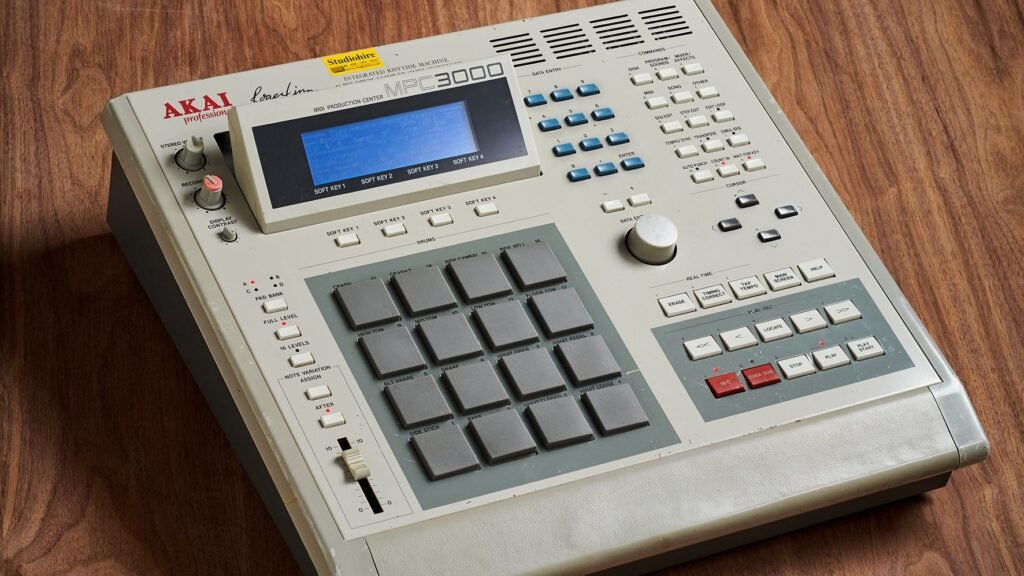
There’s a persistent misconception that has followed the sampler ever since it first appeared. Many people still see it as a machine for copying sounds—a shortcut for musicians who can’t play an instrument. An easy way out. But all it takes is a look at the history of popular music to realise the opposite is true. Sampling was never about replacing creativity; it was about expanding memory. It’s a way of listening to the past in order to build something that has never existed before. Every borrowed fragment becomes a conversation across generations, a silent dialogue between musicians who never had the chance to meet. Because songs, much like people, never truly disappear. They simply wait in the shadows until someone decides to listen again. That’s why the real protagonist of this story isn’t the sampler itself, or even three remarkable albums. It’s memory—the endless archive where no sound is ever truly lost.
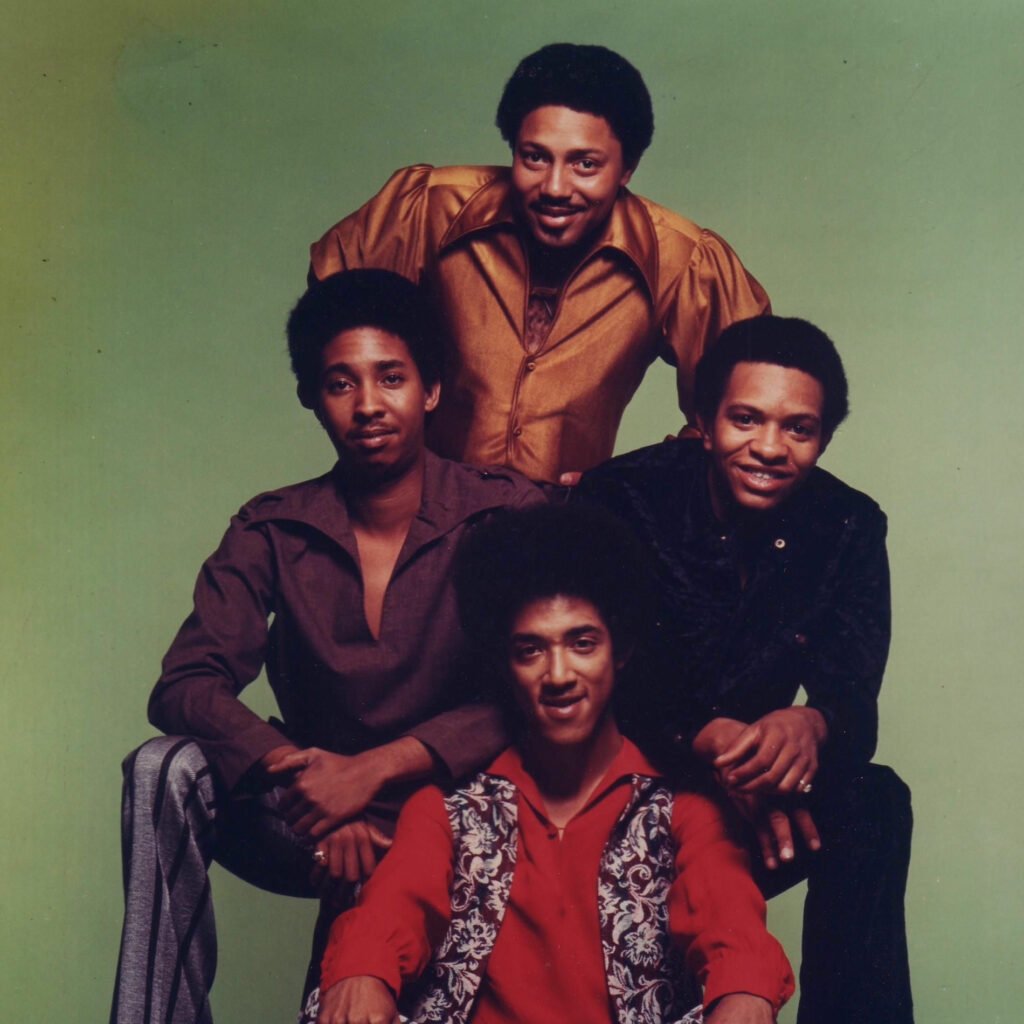
The Meters: A Library of Rhythm
Everything begins in New Orleans, a city where rhythm feels less like music and more like part of the atmosphere. It was there that The Meters developed an entirely new musical language during the early 1970s. While other bands chased bigger songs, they stripped music down to its purest element: groove. Bass, drums, guitar and organ locked together with the precision of a perfectly engineered machine. On Rejuvenation (1974), that language reached what is arguably its finest expression. Tracks like “People Say,” “Just Kissed My Baby” and “Hey Pocky A-Way” contain some of the most heavily sampled grooves in modern music history.
Not because they topped the charts, but because they offered something even more valuable: space. Every drum hit, every bass line and every pocket seemed to invite reinterpretation. Decades later, producers from hip hop, R&B, acid jazz and electronic music would discover an almost limitless source of inspiration hidden inside those grooves. They weren’t trying to imitate The Meters. They were trying to continue the conversation.
The remarkable thing is that when those records were being cut for Reprise Records, nobody could have imagined they were writing part of the DNA of the next fifty years of popular music. Public Enemy, A Tribe Called Quest, N.W.A., Ice Cube, Queen Latifah, Beastie Boys, LL Cool J, EPMD and De La Soul would all build entirely new songs on top of rhythms first recorded in New Orleans. Funk stopped being just another genre and became a library of rhythm. Every sampler became an archaeological tool, allowing producers to brush away layers of dust until they uncovered another living fragment of musical history. Suddenly a four-bar groove could live several different lives. A drum break recorded in 1974 could still breathe forty years later without losing a single ounce of its original power.
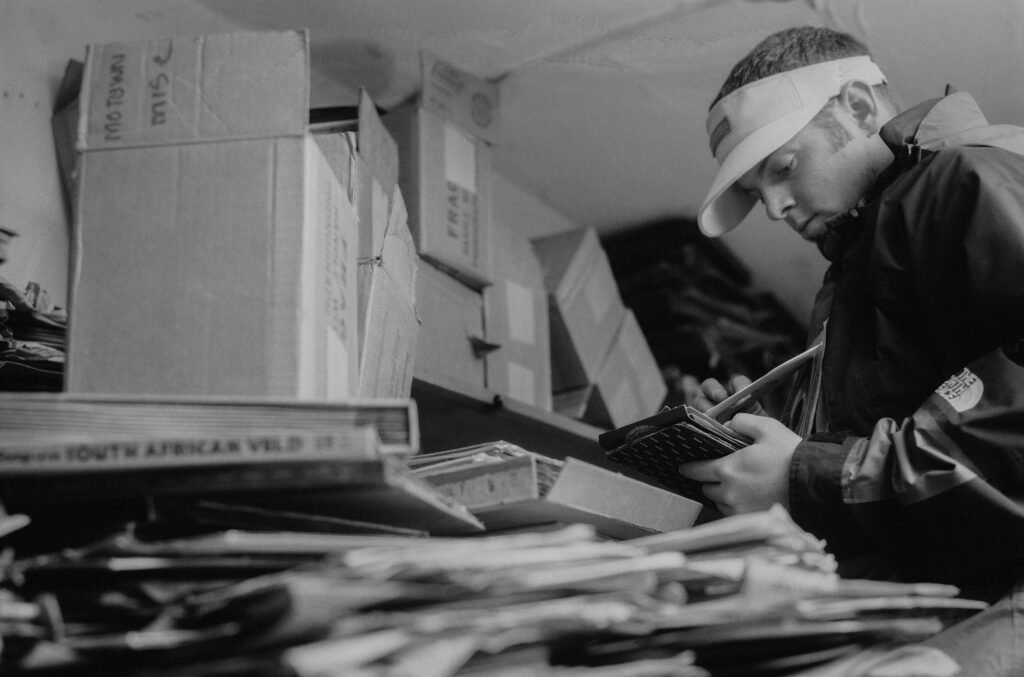
DJ Shadow: Records Made of Memories
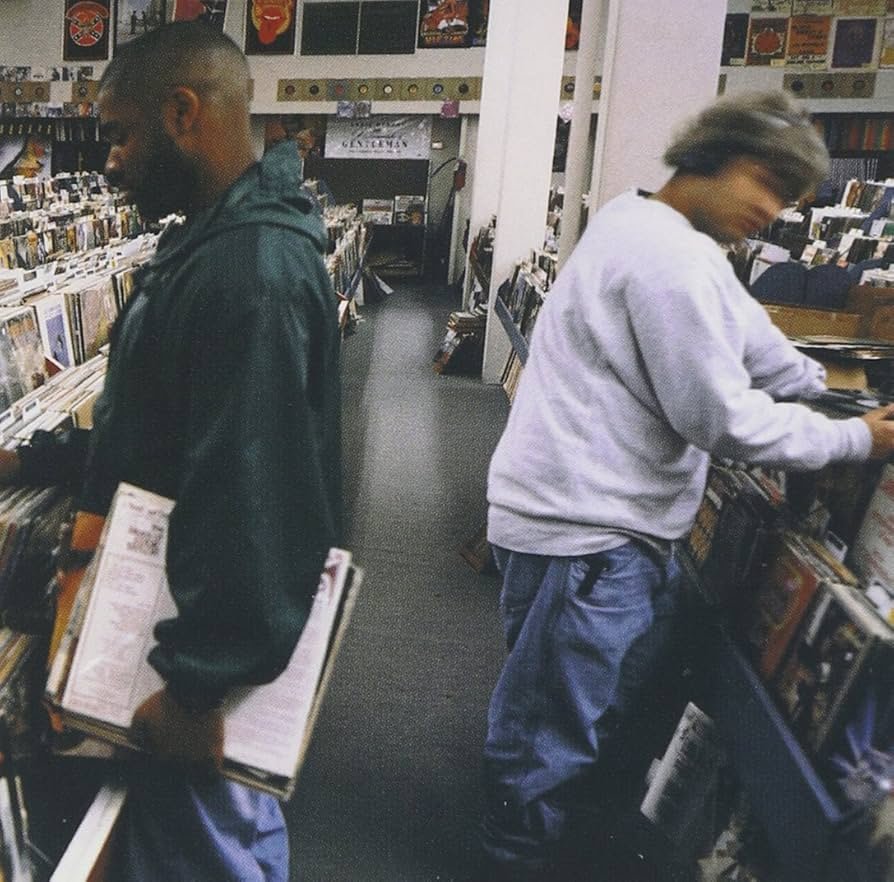
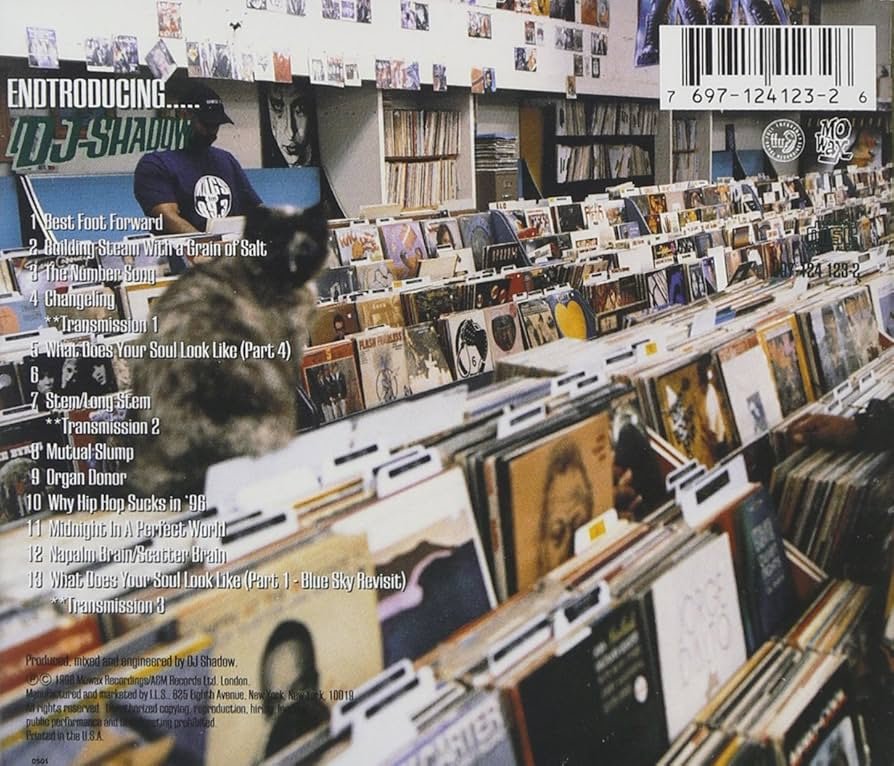
When Endtroducing….. arrived in 1996, DJ Shadow took that idea somewhere entirely different. The album wasn’t simply built from samples. It was built from memories. Shadow spent countless hours digging through second-hand record shops across California, searching for albums that everyone else had forgotten. Obscure film scores, experimental jazz, European progressive rock, spoken-word recordings, psychedelic oddities, soul records, production libraries and educational LPs—everything had the potential to become raw material. His studio resembled the archive of an obsessive librarian more than the workspace of a hip hop producer. The result was an album that sounded like the memory of someone who had somehow lived a thousand different lives. There was no technical showmanship for its own sake. Every sample served the narrative. Every forgotten fragment found new meaning when placed alongside another from a completely different world.
That’s precisely why Endtroducing….. remains so emotionally powerful nearly three decades later. DJ Shadow never used the sampler to show how much music he knew. He used it to show how deeply music could make us feel. Listening to “Building Steam with a Grain of Salt,” “Midnight in a Perfect World” or “Stem/Long Stem” feels like walking through an unfamiliar city where every street somehow stirs a distant memory. We recognise the sounds even when we can’t remember where we’ve heard them before. The album transforms nostalgia into an instrument. It reminds us that remembering is itself an act of creation. And in doing so, it quietly redefines the role of the record collector. Records are no longer gathered simply to be played—they’re preserved because each one contains a creative possibility that has yet to be discovered.
We recognise the sounds even when we can’t remember where we’ve heard them before.
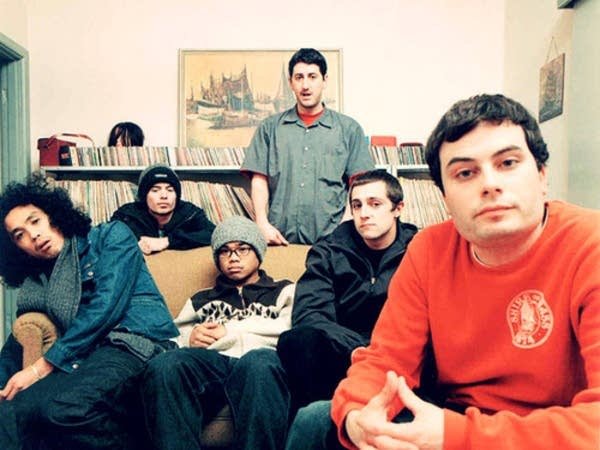
The Avalanches: Building Entire Worlds
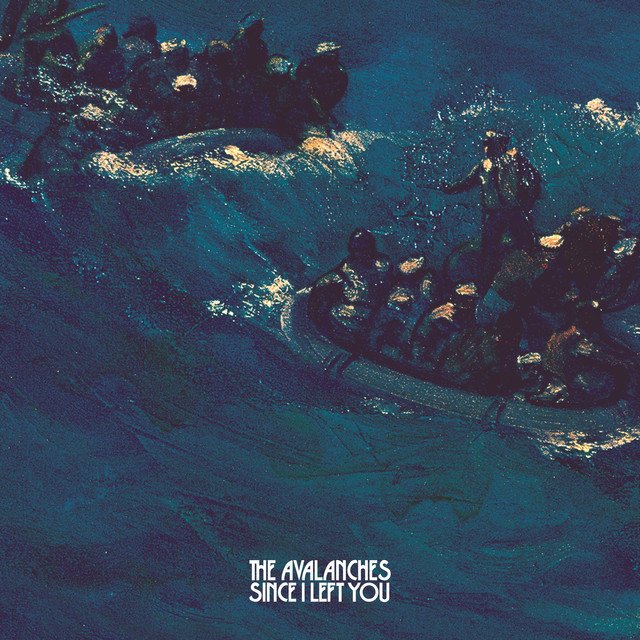
Five years later came another revelation. If DJ Shadow proved that sampling could tell stories, The Avalanches showed that it could build entire worlds. Since I Left You (2000) seems to defy every conventional rule of music production. Built from thousands of individual samples, the album flows with an ease that feels almost impossible to explain. It unfolds like a radio station drifting effortlessly across decades, countries and musical traditions without ever standing still. Swing, disco, soul, exotica, Latin music, pop, electronic records, forgotten film scores and anonymous voices all appear and disappear, woven together into one uninterrupted stream of shared musical memory. The real achievement isn’t the staggering number of samples. It’s that, by the time the album finishes, you stop thinking about samples altogether. All you remember is the journey.
That’s perhaps the greatest accomplishment of Since I Left You. It transforms appropriation into tribute and recycling into poetry. None of its borrowed fragments attempts to overshadow the original recording. Instead, every piece gains new meaning by existing alongside hundreds of others from entirely different places and eras. It’s like walking into a party where musicians from every continent and every generation somehow understand each other without needing introductions. Music stops feeling like a straight historical line and becomes an endless network of invisible connections. Suddenly you realise that every song also belongs to the people who will rediscover it fifty years from now. Because there will always be someone willing to rescue it from obscurity.
Songs, much like people, never truly disappear.
A Time Machine
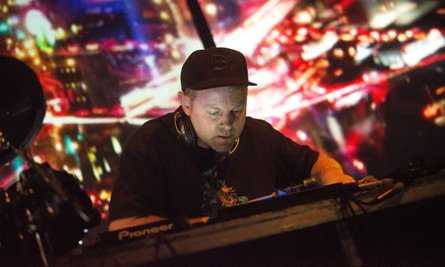
And perhaps that’s the lesson these three records ultimately share. Rejuvenation, Endtroducing….. and Since I Left You are all albums about memory, even if each approaches it from a different direction. The Meters created a rhythmic vocabulary that future generations would speak with entirely new accents. DJ Shadow transformed record collecting into sonic literature. The Avalanches proved that thousands of scattered memories could become a single emotional experience. None of them treated the sampler as a technological trick. They used it as a time machine. That’s where the real beauty of sampling culture lies. Record collectors like to think we’re preserving the past every time we buy another vinyl record. The greatest producers understand something even more profound: they’re collecting possible futures. Every forgotten LP sitting inside a dusty crate at a flea market may already contain someone else’s masterpiece—one that simply hasn’t been made yet.
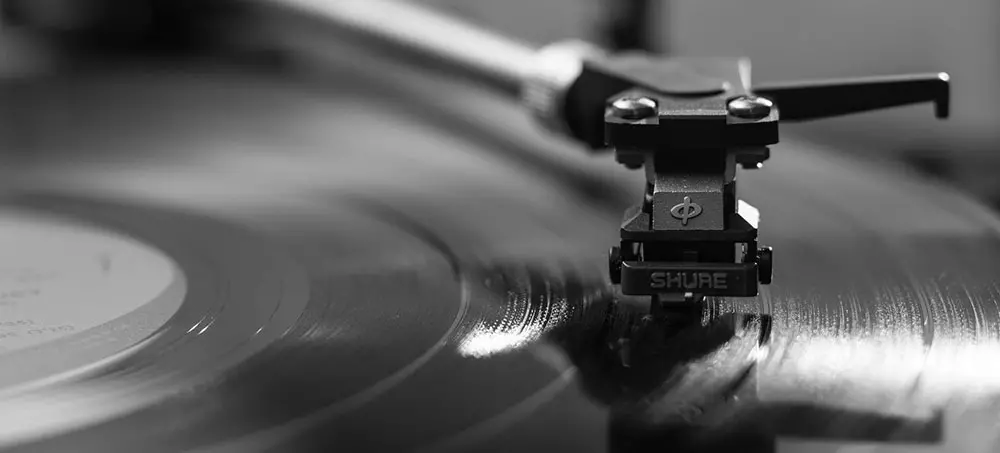
Because music never disappears. It changes hands. It changes context. It changes meaning. But it always survives, quietly waiting for another stylus to find exactly the right groove and allow memory to begin all over again.
The Trilogy at a Glance
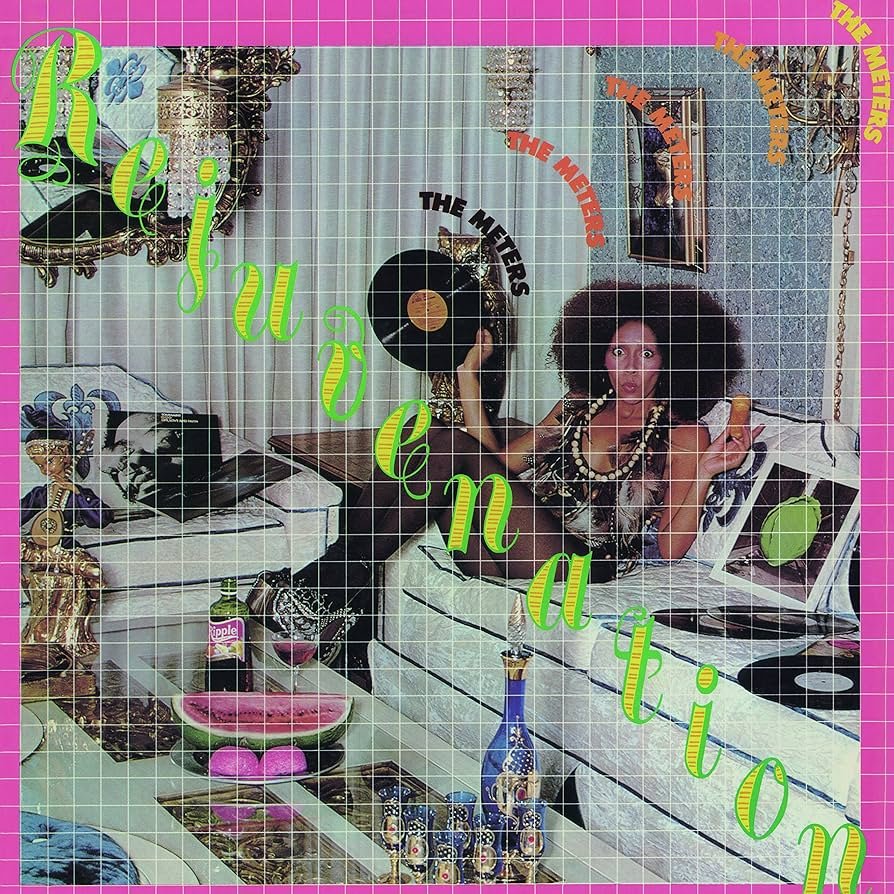
1. Rejuvenation — The Meters, Reprise Records, 16 November 1974
Track Listing
1. People Say
2. Love Is for Me
3. Just Kissed My Baby
4. What’cha Say
5. Jungle Man
6. Hey Pocky A-Way
7. It Ain’t No Use
8. Loving You Is on My Mind
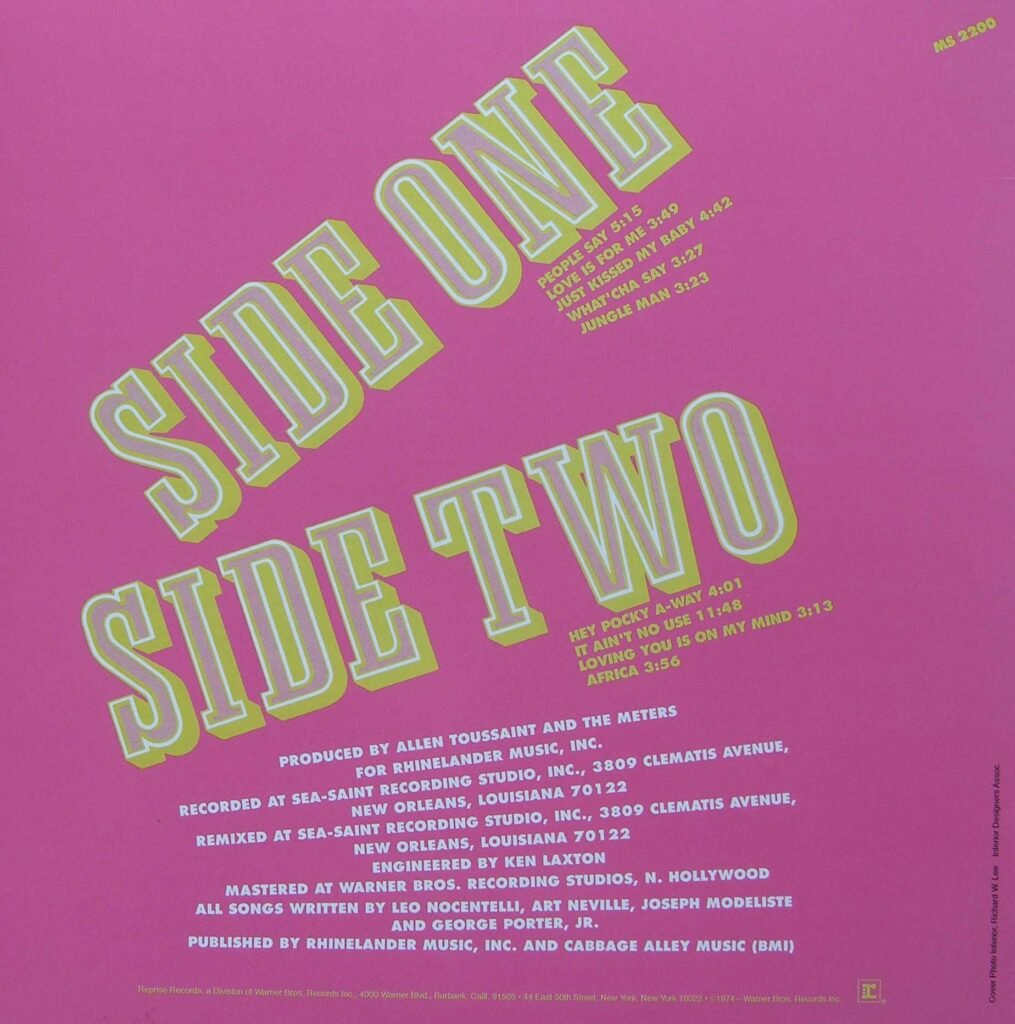
2. Endtroducing….. — DJ Shadow, Mo’ Wax records, 19 November 1996
Track Listing
1. Best Foot Forward
2. Building Steam with a Grain of Salt
3. The Number Song
4. Changeling
5. What Does Your Soul Look Like (Part 4)
6. Untitled
7. Stem / Long Stem
8. Mutual Slump
9. Organ Donor
10. Why Hip Hop Sucks in ’96
11. Midnight in a Perfect World
12. Napalm Brain / Scatter Brain
13. What Does Your Soul Look Like (Part 1 – Blue Sky Revisit)
3. Since I Left You — The Avalanches, Modular Recordings, 27 November 2000 (Australia)
Track Listing
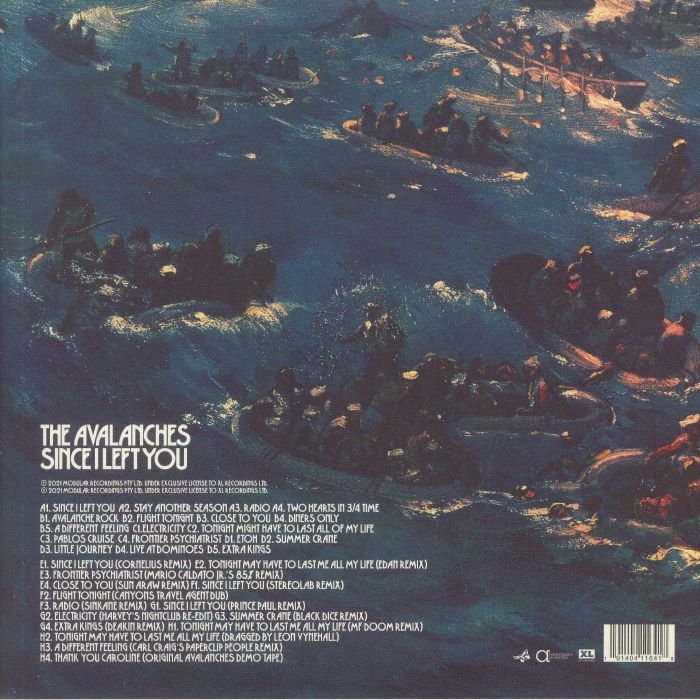
1. Since I Left You
2. Stay Another Season
3. Radio
4. Two Hearts in 3/4 Time
5. Avalanche Rock
6. Flight Tonight
7. Close to You
8. Diners Only
9. A Different Feeling
10. Electricity
11. Tonight May Have to Last Me All My Life
12. Pablo’s Cruise
13. Frontier Psychiatrist
14. Etoh
15. Summer Crane
16. Little Journey
17. Live at Dominoes
18. Extra Kings
If you’ve made it this far, you’re probably in the mood to discover more music like this !!!
 English
  Spanish
El Gran Juanjo
18 de July de 2026
Azul y Negro. Esos sí que eran unos visionarios adelantados a su tiempo.